
Global Destinations
00:0000:00
Mike is back from his annual sixteen-day golf pilgrimage through Scotland, and he's got stories: a near-career round at the Old Course (two under through fifteen before limping in bogey-bogey-bogey), full Scottish breakfasts with haggis, and a route that wound from St Andrews through Carnoustie, Cruden Bay, and Royal Dornoch all the way to John O'Groats. He also breaks down every legitimate way to score a tee time at the Old Course — from golf travel companies and Scores-street hotels to the advance lottery, the daily ballot, and the singles draw — insider knowledge earned over twenty-five years of annual trips.
Then the guys turn a skeptical eye on travel media and technology. James takes on the press's love affair with sensationalized cruise stories, from misleading "fell overboard" headlines to Netflix's Trainwreck: Poop Cruise, and explains why a rare legitimate accident — like the recent Royal Caribbean waterslide failure — deserves scrutiny while manufactured outrage deserves your side-eye. The bigger conversation: how fear-driven coverage distorts perceptions of an industry that's overwhelmingly safe.
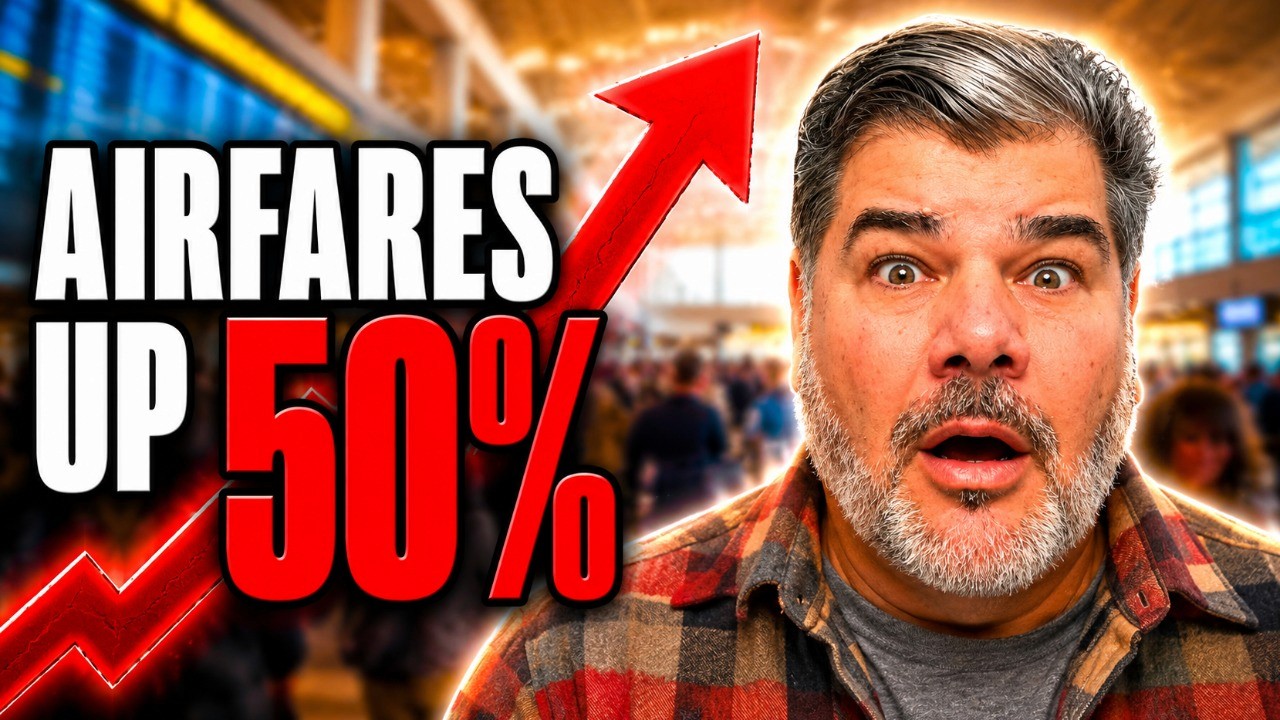
Finally, the story nobody else is telling yet: airlines are using AI to personalize your airfare, and the price you see may depend on where you're sitting, what device you're on, and how many times you've searched. Mike and James dig into Delta's new pricing partnership, the admitted two-passenger pricing quirk (and the booking trick to beat it), lingering fuel surcharges that never went away, and Mike's bold prediction that consumer-side AI agents will eventually out-negotiate the airlines' own algorithms. Plus: a French reporter's undercover sting exposing tourist pricing at Paris bistros, and your chance to win a balcony-stateroom Alaska cruise for two on Princess.
A Sixteen-Day Golf Vacation in Scotland
Mike Putman: How airlines are using AI to power their pricing. They are applying logic that turns into algorithms that differentiates the price. This revolution in technology—AI, guys—is like the advent of the internet.
It's like the television. It's like when we got the telephone. It is that revolutionary to our culture and our world. Good day, everyone. I'm Mike Putman.
James Ferrara: And I'm James Ferrara. Welcome to No Tourists Allowed. Mike, it is great to be back on a regular schedule.
Mike Putman: It is. It's great to be home for a couple of weeks. But it's going to be a couple of short weeks because I know I've got to hit the road and I think you do too.
I didn't realize that. Well, I hope you enjoy that. But it's been a nice respite here in the Southeast from the purgatory of July, the oppressive heat that we've had. We've had some really nice overcast and cooler days and rain. It feels almost like October.
So it's been nice to come back from Scotland. I had one week of purgatory and then things got kind of like Scottish weather almost. So we're going to talk about that. Headline news in the travel industry, some new ideas that are out there. So let's get started.
James Ferrara: Tell us about Scotland. You were gone for like, I don't know, sixteen weeks or something, right?
Mike Putman: I knew that was coming up. My one true vacation a year where I really try not to do hardly any work. I probably work thirty minutes a day, just trying to stay on top of things, but where I really relax and am able to unwind.
This year I went for a total of sixteen days and played golf every single day. My days looked something like this: I would wake up at 6:00 or 6:15. I'm a bit of an early riser. I'd work thirty minutes, grab a big breakfast—and in Scotland they have these huge "full Scottish" breakfasts.
That's the name of it. It comes with two eggs, haggis, bacon, big link sausage, potatoes, grilled tomato, beans, grilled mushrooms, and some kippers.
James Ferrara: No kippers so much in the full Scottish. It's fish.
Mike Putman: Yeah. But that's the mainstay of what I would eat each morning. Then I'd go and play golf and walk. They do have carts over there, but it's really frowned upon unless you have a medical need.
So you're walking six to eight miles on a golf course, probably six to seven. Afterwards, I'd walk around, hit some pubs, maybe do some shopping, do a little bit of historical sightseeing, and then have a nice dinner and a couple of glasses of wine. I'd go to bed at nine o'clock and get up the next day and do it again.
James Ferrara: So you were really in the land of golf where golf was first developed and some of the great courses in the world.
Mike Putman: Flew into Edinburgh, which is in the southeast part of Scotland, and then traveled across the Firth, which is what they call an inland body of water, across this magnificent bridge, the Firth of Forth. I always get that backwards, but anyhow, this beautiful bridge.
And then you're into Fife, which is where St Andrews is. In and around that area, I played a course called Ladybank, Dumbarnie Links, and I'm a member of a course over there called Crail Golfing Society. I played two days there and stayed in a beautiful home in central St Andrews.
It's kind of funny because there's one restaurant called Little Italy. If you go to St Andrews, you need to try it. James, it's not a great restaurant, but it is really hard to get into. It's not fancy, but they don't like taking reservations. It's almost harder to get a reservation there than it is to get on the Old Course.
This house that we were staying at was literally eight feet from their front door, right across this little bitty alleyway. Every night we'd walk by there and smell garlic coming from the kitchen—a lot of garlic. We stayed in this great house there and then traveled around, played some golf there, played the Old Course, played Jubilee.
Then I went up to Carnoustie, which is again over another body of water, and then went on up to Fraserburgh, Cruden Bay, and made our way through Inverness up to Royal Dornoch. I played there, which some ratings have as the second best course in the world. I don't necessarily agree.
Then down to Tain and up to Wick. Then we went to John O'Groats, which is the very tip-top of the UK mainland. It's as far as you can go north.
James Ferrara: Wait, I didn't hear a Trump golf course in there.
Mike Putman: You did not. We passed by at high speeds. There are several and they are actually very close to Royal Aberdeen where we played, but I chose not to play at his course. But yeah, I had a great time.
James Ferrara: So what did you eat while you were there?
Mike Putman: One of the things that's interesting is there's no salmon. Local people in Scotland don't eat salmon because almost all the salmon is farm-raised now. Here in the US and even in Europe, you'll see Scottish salmon, and that's like an uplifted brand, but the people in Scotland just really don't eat it because it's farm-raised.
It's raised in these beautiful clear lakes, but anyhow, they don't eat it. I had a good bit of venison. They ate a lot of pork and beef. We had a fair amount of haggis. Do you like haggis?
James Ferrara: Yeah, I'm okay with it. Tell everybody what haggis is.
Mike Putman: Haggis is internal sheep's organs that have been ground up and filled in a casing of intestines of the sheep with lots of spices and herbs. Sounds disgusting, but it actually is pretty good. It's very tasty. I've had a good bit of that.
I think the other thing is just the food. They don't serve a lot of food that has been processed. It seems to be all fresh food. I felt so much healthier when I came back and actually had to tighten up my belt a couple of loops, believe it or not. Great experience.
James Ferrara: That's good. If you had one perfect moment on that trip that really said "here I am in Scotland," what was that moment?
Mike Putman: Everybody wants to play the Old Course, right? Which is where golf really—St Andrews. Right. Yeah, in St Andrews. Through fifteen holes I was two under par, which was pretty close to the best round I've ever had on the most famous golf course in all the world.
I came in bogey-bogey-bogey and shot seventy-three. So I kind of limped in. But there's something special, not only about playing—it felt great to play good at that course—but there's this history there.
You're walking down seventeen and eighteen, you see all these buildings that are hundreds of years old that have been there. All the great players of the world have played there. It's just a special moment, especially as a golfer. It's a bit of history and a bit of beauty as the sun was coming down.
How to Secure a Tee Time at the Old Course
One of the questions that I always get, because I've been going to Scotland for many years, is: how do I get on the Old Course? The Old Course is really hard to get on, and I thought I might just take a couple of minutes sharing the different ways of doing it.
Every year that I've been there, I have played the Old Course, and I've been going for twenty-five years. One of the ways is you can go through a golf travel company. There's several, like PerryGolf or Premier Golf. They do prearranged packages and have access to some tee times.
They do a great job, and if you're only going over there once and not concerned about money, that's one way of doing it. It's relatively pricey because they add a significant surcharge for the privilege of getting you on.
Another way is there are some hotels on what is called the Scores. The Scores is the side street right there at St Andrews Old Course. If you stay three nights, some of those hotels have tee times that have been given to them that they can get you on.
Third way: St Andrews during the summer and late summer will do a lottery for 2025. You have to play, and that's how I got in this time. We actually did a lottery and you pay a certain amount of money, which is basically the greens fees for the Old Course and for another course.
Then another way is once you're there, if you're more of a gambler, you can enter a daily lottery. You just go to St Andrews Links Trust; you can do it online. For the following day, you can request a tee time for a group.
The fewer people, the more likely you are to get on. They draw your name out and you are notified a day and a half in advance.
The last way is they have a singles lottery the day before. You apply today for tomorrow. You have to do that in person at the pro shop or they have a place right beside the starter that has a laptop or iPad. You can say you're willing to play by yourself if there's any spots available. Oftentimes, you can get on that way.
You also could spend some time in St Andrews and meet a local. The locals have access to tee times and you might could convince one of them to play with you as well.
James Ferrara: You can't walk up and bribe the guy at the—
Mike Putman: There used to be stories like the starter at St Andrews being one of the wealthiest guys in Scotland. I have done that in the past, but that was a long time ago and it does not work any longer. It's very regulated.
Upcoming Travel Highlights
James Ferrara: Well, sounds like a beautiful trip. Very nice to have you back. I am heading off on a cruise next week. Brand new ship from Royal Caribbean, and we're doing the christening and naming ceremony.
Then a short cruise with the press and some VIPs to see the new ship. Of course, it goes to Perfect Day at CocoCay, the—I don't know what you call it—private island amusement park. I'm really looking forward to that and I'll report back on it.
Otherwise, I've been at home a little bit this summer, which I was happy about. But then later on, you and I are going to Porto and we have a couple big trips. We're going to St. Vincent and the Caribbean. So a lot of travel coming up later in the year.
Mike Putman: Don't forget Bangor, Maine.
James Ferrara: And Bangor, Maine. Right. Looking forward to that. There have been a couple of headlines and even a Netflix movie that have caught my attention lately, and something I want to talk with everyone about.
Sensationalism and Safety in Travel News
That is the tendency of the press to sensationalize travel stories. The press loves a good airline accident or near miss. They love a story about someone being dragged off a plane, and they will make it seem as though these things are happening all the time.
This is particularly true with cruise lines. They love a good cruise disaster story. Oftentimes you will see headlines that such and such fell from a cruise ship. If you go beyond the headline and read the story, there's more truth in the detail.
It's very rare, if it ever happens at all, that someone falls off a cruise ship. It's not like the railings are a foot tall. In fact—and this is tragic when it happens—I want our listeners to understand that these are self-inflicted wounds, essentially.
You fall off a cruise ship because you got drunk or high and climbed up and sat on the railing, or some questionable father dangled their child out the window. Now, there are legit accidents. One happened this week. Did you see the story about Royal Caribbean and the waterslide?
Mike Putman: That's a true accident. No fault of the passenger, except that they had the lack of good sense to get into one of these things to begin with, but it's a waterslide with a vertical drop.
James Ferrara: The ship is only about 18 months old. It seems to me that 18 months of people dropping vertically and hitting the acrylic curve on this waterslide eventually caused that acrylic panel to crack and fail.
This guy did the vertical drop and instead of making the curve, he went right through the clear acrylic panel to the deck below. Thankfully, it was the deck below. He was hurt and cut up by the glass, but he survived and is in stable condition.
But some of these slides go out over the water. Can you imagine? It does bring up questions of who is monitoring the maintenance and what are the requirements to maintain these things.
Just like when you go to an amusement park on these crazy rides, you want to know that there are laws and requirements in place to maintain safety. I assume that Royal Caribbean does a very good job at this, but for whatever reason, that was a legit accident.
What I really want to talk about is the sensationalist, salacious stories that ultimately wind up making people afraid to travel. They hurt the travel industry and create false reputations.
There are tons of videos on social media about these fights that break out on cruise ships. Some of them are racially motivated because they love to film large groups of Black people getting into these fights as if the underlying message is this is the way all Black people behave.
I really hate that they're able to get away with that. You see that and maybe you're afraid to go on a cruise because you think all cruisers are rowdy. You and I have been on enough cruises to know that there are some cruises like that, but the vast majority of cruises are not.
The one that really gets me now is Netflix. They've jumped in because—hell, ratings, right? They've got this documentary on Netflix right now called Trainwreck: Poop Cruise. It's actually the story of the Carnival Triumph, which had a fire and languished in the water for a couple of days.
It was a terrible situation with people on board needing to get water and food on the ship while the systems were failing. But this really sensationalizes it. I find that regrettable.
I want people to have a sharp eye. When you see this stuff, think analytically and don't just accept the garbage that's being thrown at you.
Mike Putman: I think there were some errors made on that particular cruise that sailed out of Galveston. But people weren't dying. There was a lot of drama that was built up in the documentary.
It could be because they're trying to leverage their position to get something out of it, say that they were suffering so bad so that they could potentially get some type of greater compensation. Although I think Carnival did a job of recovery post-mortem.
But it puts a terrible thing in people's minds. Just like you said, this thing about people falling overboard—these railings are waist-high or chest-high in some cases. You just cannot fall over. You have to jump or be pushed. If your wife throws you over, that's not anybody else's fault. He may have picked the wrong wife.
AI and Personalized Airline Pricing
James Ferrara: All right. That's been on my mind. I'd be interested to hear from our listeners. Please visit our website or our YouTube channel and tell us what you think. Mike, you've keyed in on some new technology and a little bit of controversy about it.
Mike Putman: Yeah, it's how airlines are using AI to power their pricing engines. Delta has announced that they partnered with a company to help them maximize revenues. And those who aren't on YouTube, I'm giving air quotes here: "maximizing revenues."
Basically, they are applying logic that turns into algorithms that differentiates the price that you might pay versus what I might pay or what James may pay.
There's a lot of factors involved, such as where are you physically located when you're doing the search? Are you in New Jersey? Are you in Taiwan? Are you in South Carolina? What time of day? How many times you've come back to the site to look at things?
The end result is they are charging people different prices for the exact product based upon factors that are probably outside of your control. There's certainly some controversy about that.
As a company, I get it; you want to maximize every seat-mile revenue. But at the same time, this puts a little prejudice into the system. I think the good news is what will happen over time—this is my prediction.
What will happen is that as travel intermediaries that buy tickets on behalf of customers, we will have our own AI agents that will communicate with the agents sitting behind this pricing wall.
Over time, the consumer-based or travel agency-based AI agents will learn exactly how to beat their system. Mark my words, nobody's talking about this yet, so you heard it here first.
What will eventually happen is the AI agents on the demand side will outsmart the AI agents on the supply side. It's simply because there'll be a hell of a lot more agents on the demand side. It'll learn the algorithms and how to beat the system so you ultimately get the best price.
James Ferrara: Some of the controversy comes from people concerned that the data being used might go so deep that it almost violates privacy. Beyond what city you're in, they can tell perhaps what street you're on or what zip code you're in and what the average household income is there.
It might be much more invasive than that. We know how these algorithms work. They might be able to know your other buying behavior. Companies that are using this deny they are going down to an individualized level of data, claiming it's anonymized and generalized.
But the potential for abuse is here. In other words, if they know that Mike makes three times as much a year in income than I do, Mike's price on the airline ticket might be higher.
Mike Putman: Well, I'll tell you one thing they have admitted to. Delta, American, and United admitted to charging a different price if you book for two people. This is something that has come to light in the last few months.
If you do a search for one person to go from point A to point B, and you do that same search with two people, the price is less per person with the two people. The reasoning they give is that one person is more likely a corporate traveler. If you're traveling together, it's a leisure traveler.
They feel they're justified to charge a leisure traveler less. Through the airline site, you can book it for two people. You always have a twenty-four-hour void period. You could book one for you and your dog, then call them up within twenty-four hours to get the lower rate and cancel the other reservation. That's one strategy.
James Ferrara: I wonder if there are other ways. As you said, I think this will become self-defeating. I wonder if there are other ways to defeat it, like if you have a VPN on your Wi-Fi service or use private browsing so you don't give them information about who you are and where you are until after you've seen the pricing.
Mike Putman: I can tell you a little bit because I've been on an airline site that I fly with a good bit. I was out of the country and I signed in, and it signed me into the French site for this US airline. It gave me a different price.
I put my VPN on and signed into the US to compare, and it was definitely a different price. So this US-based company was offering people in France a lower price for the same thing than they would someone in the US.
It's just an example of how this revolution in technology—AI, guys—is like the advent of the internet. It's like the television. It's like when we got the telephone.
One of the other things too is there's some discussion about how these new pricing engines can price things on the fly based on the cost of fuel. You might buy today and fuel is sold at $3 a gallon, and tomorrow it's at $3.25.
A human couldn't go in and update that, but these systems have the ability to do that. That part seems fair to me. These are real costs that the airlines are having to incur and it's a way to shelter them Aaron Powell.
But the question is: will it ever go in the other direction? If the price of fuel goes down tomorrow, will they adjust? I doubt it.
That is one of the great things which I don't understand—how our government lets the airlines get away with still having these enormous fuel surcharges on international tickets.
Turkish Airlines came out with fares two weeks ago that are twenty dollars each way to Europe. To Milan and a few other places. Twenty bucks each way.
A hundred or two hundred of that is taxes and security charges, but that still leaves another call it three hundred and eighty. Well, that three hundred and eighty is for fuel surcharges.
They put those in place when fuel was really high, but fuel is not really high now. For some reason, our government allows these airlines to continue to do that.
You don't get credit on your frequent flyer miles for the fuel surcharge, and I don't think they have to pay tax on it. It's kind of like some insider pocket money for the airlines.
Tourist Pricing Pitfalls in Paris
James Ferrara: Well, as you said, we will start to see companies using AI on the buy side to favor customers and help us optimize the purchase. So it's going to even itself out. Mike, I think you wanted to talk about a couple more things.
Mike Putman: One of the things I wanted to share with the listeners is coverage from a London paper. A French reporter who worked for this London paper went in disguise, dressed up like an American tourist with a baseball cap and cargo shorts—things that typically Europeans might not wear.
He probably had a Yankee shirt or something about the great state of New Jersey. He went into a bistro at the Champs-Élysées, sat down, and ordered tap water. He got the deal.
He comes back the next day and as the American customer, they charged him six euros for the Coca-Cola. When he was French, they brought out a Coca-Cola that was 6.50, and for the American tourist, it was 9.50 euros.
But the best one of all is that when he was French, they told him the service charge was included in the price. As the American, even on the bill they printed out "service charge not included" and asked for a tip.
It's just a real interesting thing. You have to be very careful, especially in Paris. Don't dress like a typical tourist. Try to speak a little French, be nice to people, and be very clear.
One of the suggestions was if you ask for water, say you want tap water and you just want to make sure there's no charge for it. When you want wine, point to it on the menu to make sure it's clear what you're pointing at. If they don't deliver what you want, push back and ask to speak to a manager.
James Ferrara: Look, it does happen. I have a house in a resort area and there are places here that have different prices for locals versus the resort clientele. I've seen that for years. Is it ethical, Mike? I don't know. It probably happens in very touristy areas.
Mike Putman: If you have a set price for a local versus a tourist, I can get that. But what these folks were doing in Paris was charging different prices and making up different rules for tourists, which is different.
Saying service charge is not included for some but it is for others—that can't be the sam Aaron Powell.
Sweepstakes and Closing Remarks
James Ferrara: At the end of the day, it's a bit ungrateful because the areas you're talking about really owe their economies to the tourism trade. It's a bit disrespectful.
But here's how you can come out ahead: you can go to No Tourists Allowed and sign up for our giveaway. We're giving away a luxurious cruise for two to Alaska.
It is for a balcony stateroom and it is on Princess Cruises, one of the great cruise lines of the world—the Love Boat, if you remember that series. I think you'll have a wonderful time.
You can register for this at no charge to you by going to Notourstaloud.com and clicking on the sweepstakes icon.
Mike Putman: Right. You can get multiple entries by doing different things like signing up for our newsletter. Follow the instructions at the website, Notourstaloud.com. We want you to win that luxury cruise in Alaska.
James Ferrara: Absolutely. We'll be giving it away in the upcoming week. Please stay tuned for other opportunities to register and get some sweepstakes entries. As always, we really appreciate your support.
Mike Putman: Thank you for sharing our podcast with your friends and family. Please continue the feedback. We love that.
If there are any items or stories you want us to cover, please share that on the website. We'd be glad to cover that as well.
James Ferrara: Absolutely. Thank you for being with us, guys. No Tourists Allowed. Bye-bye.
Credits
No Tourists Allowed is produced by Podcast Studio X and is powered by BuzzyPod.