Tips & Hacks
Why Your Hotel Room Isn't Ready Until 4 PM, and Other Travel Questions Answered


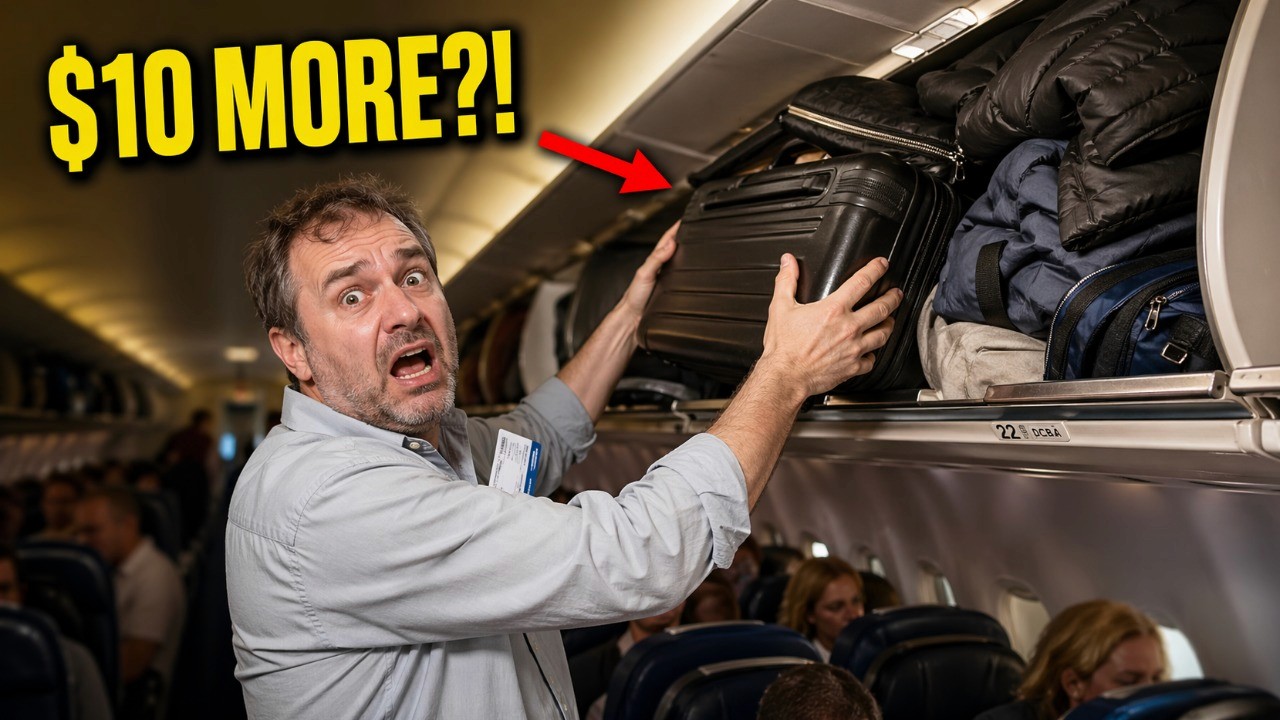
No Tourists Allowed is trying something new. Instead of the usual format, Mike Putman and James Ferrara are opening up the mailbag and working through the questions, thoughts, and complaints listeners have been sending in. The premise is simple: two guys with decades in the travel industry explaining why things work the way they do, and what they would actually do in your situation.
This episode covers the 4 PM check-in problem and why a three-night stay doesn't really get you three full nights, plus how Las Vegas turned early arrivals into a revenue stream. Mike and James dig into minimum connection times and who actually sets them (hint: it isn't a government agency), whether booking two separate tickets to save a few hundred dollars is worth the risk, and what to do when a crew strike cancels your flight and the hold time is measured in hours. They also disagree productively on convention hotels, with James happy to stay a few miles away and Mike admitting he would now pay 200 euros just for a midday nap.
The episode closes with a story from that morning: a group arriving for a birthday celebration only to find the hotel had no record of their prepaid, confirmed reservation. James walks through how those supply chain failures happen, why getting your money back is the easy part, and what travelers can do about the stress and lost time that no refund covers. Have a question, a situation, or even a good story? Send it in at NoTouristsAllowed.com and it might get featured on a future episode.
A New Format for No Tourists Allowed
Mike Putman:Welcome to No Tourists Allowed. I'm Mike Putman.
James Ferrara:And I am James Ferrara. Mike, we have come up with a new way to present our brilliance on our podcast. Have we not?
We've been talking about this a lot. We've been doing a lot of things over the last three or four years that we've been doing the podcast and thought it was time to refresh and innovate. We wanted to do something new and we've done that.
Mike Putman:Yeah, so for our listeners out there who are used to our normal abnormal podcast, this week, we're going to try out this new concept of talking each other through different situations and questions that have been sent in.
We want to really give you guys some answers and give you the underbelly of how and why the travel industry works a certain way. So if you have any thoughts or if this spurs any ideas, please send them in.
You can go to NoTouristsAllowed.com. There's a place that you can input your ideas or ask questions, and we'd love to feature yours as well on the podcast.
James Ferrara:Yeah, well, we have called these questions, thoughts, and complaints from all the submissions that you guys have made. Our listeners have made them to us, sometimes often asking us for advice or asking us what we would do in a particular situation given our decades of experience in the travel industry. We just thought, hey, why don't we make this public and share it.
Why Hotel Check-In Times Are So Strict
Mike Putman:Absolutely. So I'm going to ask you the first question, James. Let's say you run a big hotel, and that big hotel is near a convention center, like the Jacob K. Javits Convention Center or Greenville Convention Center, whatever.
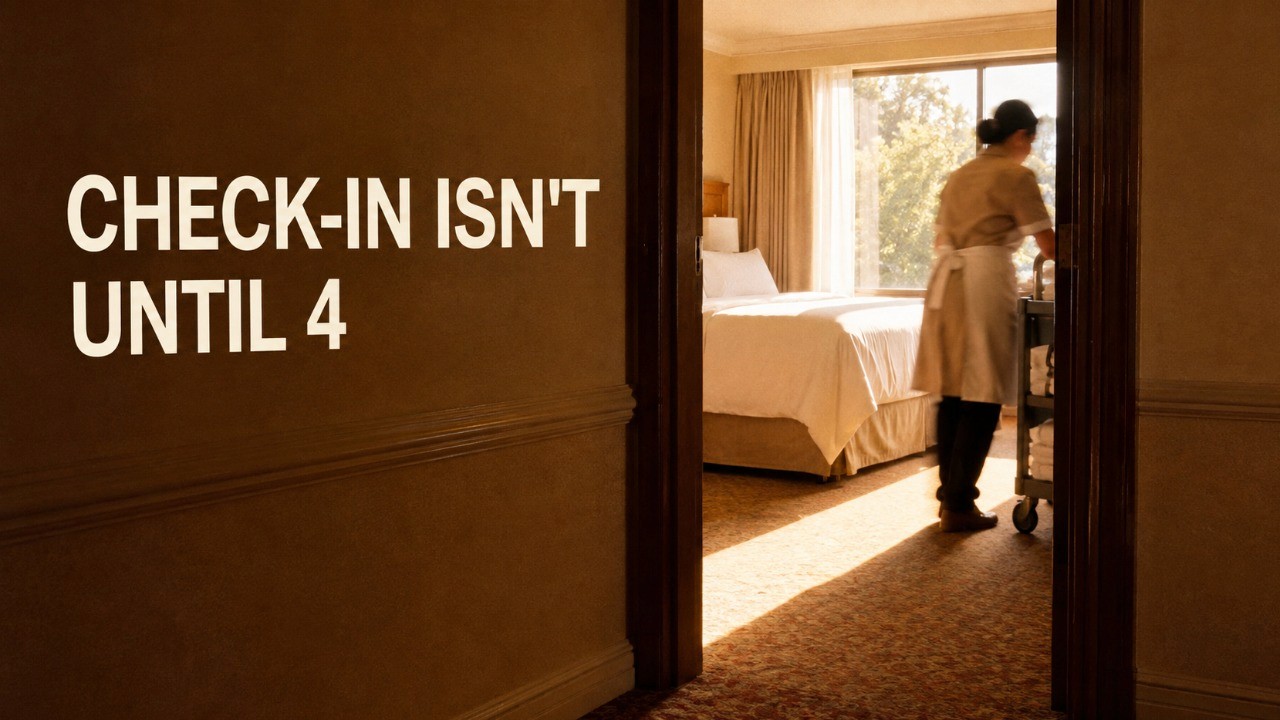
Every morning, people coming to conventions, whether they drive, take a train, or fly, they land early because they want to get checked in. They walk up to your hotel's desk and they're told the room isn't ready until four. Why is that and what do you do?
James Ferrara:Yeah, and that's really site specific. Because traveling internationally, the world is so used to Americans traveling from the West to the East.
Going into Europe, for example, to arrive early at a hotel usually is not a problem. They expect you early because so many people fly overnight and arrive in the morning. So getting your hotel room early at a lot of hotels in Europe is not a problem.
But here in the States, it is because it takes housekeeping a while to get through all the rooms. Especially if you're checking in on what we call a turnover day, a big turnover day like a Friday or a Saturday where so many people are coming and going that it really takes them the full day to get the housekeeping done and for the rooms to be ready.
If you're in Las Vegas, this is a business plan. In Las Vegas, there is a charge. Depending upon how early you are, they might let you in the room, but the charge gets even higher. So they've learned how to monetize this in places like Las Vegas.
In the same way that the airlines figured out how to unbundle the fare and charge you for every little thing, the hotels in Las Vegas figured out that they could make money by making the rooms available a little earlier for you.
Mike Putman:So I will tell you, I've got a fundamental issue with this. If you rent a room for three days, this check-in at four o'clock and check out at eleven is pretty standard. It might be ten and three, but it's in that ballpark, so let's not get caught up with semantics.
But you purchase a room for three nights, and you have two 24-hour room rentals in there. Then you have one room rental where, if the optimum time you can check in is four and the checkout time is eleven, that gives you 21 hours.
It's a little misleading to say you're getting a room for the night when you're not getting it for the night. And sometimes these checkouts are 10:00 AM and check-in is four. You're missing six hours. That's one-third of the hours you're actually missing.
I think there's a little bit something wrong with that. Now, operationally, I understand why it happens. They're trying to get you out of the room early in the morning so that they can get the house cleaners in there to clean and get everything ready so that they don't have disappointed people at four. But this is the one thing that is abused.
Going to Europe, I was staying at a Moxy Hotels property, which is a Marriott property, and I have status. I'm titanium elite, something some kind of elite status. And so I go to check in and I've got two other guys traveling with me and they don't have status.
I go to check in and they say, "Oh, your room's ready." These two other guys go in to check in, actually even before I did, and they said, "Your room's not going to be ready till four." Now, they gave me my room at 10:00 AM.
All these guys had to wait till four. And so after I checked in, I walked in the lobby, I saw these two guys. And if you've ever seen people that have flown over all night, they're sitting like a zombie in the lobby, drinking coffee and trying to get some work done, but they're worn out.
Everybody wants to take a shower and just a nap. These guys were worn out. I said, "What's the situation?" They explained it to me. And then I walk them back up to the desk and I said, "Come on guys, these are friends of mine. Don't you have rooms available?"
And they're like, "Oh, yeah, we found a couple of rooms we can put them into." I get this concept of treating people with status a little bit better. And I understand the concept. Maybe you got to hold a room or two back for other people that might come in later with status.
But I think this thing is really abused. And I like your concept of, okay, if you're going to be in early, just pay us a little bit more. Instead of it being $150 a night, you pay us $30 and you get an early check-in guarantee.
James Ferrara:Right. That's all it is. Usually $30, $50 if you're very early in Vegas. Mike, there are, to be fair, more moving parts than that.
Because then you have guys like you who are already in the hotel and you're supposed to check out at 10:00 AM, but you've called down to the front desk that morning and said, "I'd like a late checkout because of my status." Now you're in the room till one o'clock in the afternoon.
And so you've got people coming from that direction. You've got people with status arriving early. And then you've got the hotel in the middle trying to make allowances for enough rooms that they can give away, but not too many rooms that they give away early so that they're messed up when it comes to having rooms being ready at the time that they promise everybody.
So I do think it's kind of like an arbitrage in there. It's like you're juggling a little bit. And the fees, although I get annoyed at these fees, they tend to weed things out a little bit. Because then there are a whole bunch of people who say, "Well, I'm not going to pay the fee." And so the demand goes away. And that means there's a room available for me if I'm willing to pay the fee.
Mike Putman:But James, I know you, like me, both of us as kids were well-traveled. We traveled a lot, lucky enough. And this did not happen until the last ten years. I mean, this was a non-issue.
It's not that there are that many more people traveling now than there were. There's not fewer hotels. It's just all this stuff just kind of worked. You got to a hotel and there could be some extenuating circumstances where they would say, "I'm sorry, we were oversold last night. We don't have a room ready for you."
But all of a sudden, this has just become this big mounted issue, which I just don't fully get. I mean, I understand certain parts of it, but it's also like the hotel saying daily room service is optional, which by the way, for me is fine.
I don't want people cleaning my room. I don't want them in there every day, messing my stuff up. And I know you do, but I don't. And if they clean my room once every three or four days, I'm happy and I'm left in peace. But there's these things that have just been changing, and I don't know why this one did.
James Ferrara:Look, it's cost-cutting on the part of the hotels. It's higher occupancy rates. I mean, things change over time. We go through periods where hotels are struggling and have lower occupancy rates; they're a lot more accommodating than with higher occupancy rates. Hotels are not so accommodating.
I think be careful of rose-colored glasses because back in the '80s, I mean, I flew back from Hong Kong and stayed over a couple of days in California in a five-star resort. But when I arrived, I arrived so late, they had given our room away and I was walked, which means I had to go to another hotel to stay.
So those things happened even back in the day. Maybe I'll give you one more on this, which is the training and professionalism of people at the front desk is not always what it should be.
If I were general manager, which is really what this question is about, if I were a general manager at the hotel, I would certainly be sizing up my customer. Is this a frequent guest at my brand? Is this clearly a sophisticated traveler, a frequent traveler?
Have they approached the desk with the right attitude? Did they treat me nicely? Do they seem polite? These are the kind of people that I want to have come back to my hotel. Brian Tracy taught me to look at a guy's shoes. If his shoes are all messed up, that's a bad sign. So you want someone who has good, well-polished shoes.
Mike Putman:Yeah, but I have seen sitting in lobbies and hotels in London, people walk in and every time they're saying, "I'm sorry, check-in's four." They don't even look. "Check-in's 4:00 PM. Check-in's 4:00 PM."
James Ferrara:I will tell you that I have some techniques for that. It is how I approach the front desk and it is how I treat people. And it works a lot of the time.
If you create a rapport with somebody at the front desk before you make that ask, you'd be amazed how well that works. But you've got to care enough. You've got to stop and ask someone how their day is going and smile.
Some people don't want to work that hard. But if you're willing to work a little bit, I think you'll do better in this area.
Mike Putman:Yeah, for sure. For sure.
Understanding Minimum Connection Times
James Ferrara:So, Mike, one that we get all the time is about airline connections. People are so stressed out about air travel and about airports.
But we hear all the time, why does the airline allow me to fly with a 35-minute connection between flights if they know we're never going to make it? We hear that a lot from people, a lot of frustration about missing flights. But how did I miss the flight if they allowed that short connection?
Mike Putman:Yeah. And it's certainly a fair concern. The airlines are trying to sell as many airline tickets as possible. And they're trying to sell as many airline tickets as possible at the highest rate that they can. I mean, that's not evil. It's just the business, supply and demand.
James Ferrara:Right. Right.
Mike Putman:And so for them, if they can create these tight connections, they can say a reasonable connection in XYZ airport is between 30 minutes and five hours. Then they can program their systems to say, "Okay, if someone's making a connecting flight, then you can pair these flights together."
Traditionally, the ones with the longer layovers will typically be less expensive because the demand on those flights would typically be less. And the ones with the lower or shorter connection time or layover time would tend to be more expensive.
The reason that they do it, and they really shouldn't do it if there's no way you can make it, but I haven't seen an airport I could not make a connection in 20 minutes or 25 minutes, and I've done some in five minutes in fairness.
Some people just kind of take their time or I don't know what it is, but the airlines do not have an incentive to sell you a ticket where the connection is too tight. That would be the thing that I would say because they're going to have to re-accommodate you if they state that this is what is called a legal connection.
The airlines publish by airport what a legal connection is, or you can call your favorite airline and they can tell you. As long as it's a legal connection, if you miss that flight because the connection was too tight—and it might mean you're a slow walker, it could mean you're in a wheelchair, whatever—it is their responsibility to get you to your destination on another flight at the airline's own expense.
So it's not your responsibility. Now, if you go sit in the bar for three hours or for three drinks and you miss your flight, that's a different story. But if there isn't enough reasonable time to get between arrival gate and departure gate based on your situation, then the airline's responsible and they have to put you on another flight.
They could put you on another flight that only has first-class seats and you bought a coach seat, or that is twice as expensive, but you as the consumer don't have to pay.
James Ferrara:Yeah. I mean, look, try flying into Dallas and landing in one concourse. You're in C and you have to get to E and Dallas is humongous and you got to get on a train and you've got to run through these long concourses. I've done it many times.
I get it. It takes a little while to make those kinds of connections. I would say this. First of all, people think that there is some authority—I had to look this up myself, guys, I'm going to be honest with you—they think there's some authority that sets these minimum connection times, a regulatory authority, and that is not true.
There is the International Air Transport Association, what we call IATA, that does approve these, reviews and approves these, but they are set by the individual airlines and airports in concert with the airports. So that's interesting.
What I would say is they're really set by you, the traveler. In other words, you always, well, mostly, have options. And you're choosing that pair of flights with that 35 or 45-minute connection time.
If it's too tight or if you're uncomfortable or if you're unsure, there is almost always another set of connecting flights with a longer layover. It might be an hour and 15 minutes, it might be several hours.
As Mike said, it might not be as attractive to you in the sense it'll take you more time to get where you're going, but it might give you some peace of mind. So you're in the driver's seat, in my opinion, and I often look at that. I look at the interval between the flights, and I make a conscious choice to either chance it or not.
In today's world, where the air travel system is sometimes very fragile, and especially in areas where weather is a factor, you have to be careful. If you're traveling in the north in the wintertime, you're going to Chicago, or if you're traveling through the southeast at this time of year when there are heavy thunderstorms, those are probably not the times for you to pick these close connecting flights.
You should leave yourself a little more room. I think we all bear some responsibility.
Mike Putman:That part I definitely agree with. Summers and I don't know if it's just the Southeast. I think maybe it's just the East because the thunderstorms roll in.
When I was going to Europe last month, it was just devastating. There were half the transatlantic flights out of Philadelphia got canceled one day.
James Ferrara:All right. Don't be so sensitive about the Southeast.
The Risks and Rewards of Separate Flight Tickets
Mike Putman:Well, I mean, you—here's one James, I want to get your thoughts on. Someone booked a transatlantic flight and then a cheap onward flight as two separate tickets with a five-hour gap just to save a few hundred bucks. Is it smart to do? What are the consequences? Would you do it?
James Ferrara:Okay. So everything is a risk calculation. People do it. These two tickets are not connected. You've booked one ticket with one airline, usually a separate booking and separate ticket, and usually with another airline. They're not connected.
The problem is, if something happens to your first flight, they don't help you at all with the second flight. The second flight won't help you because they're unaware of each other as disconnected arrangements.
It can save you money, but it can complicate two things. It can complicate this issue of flight interruption of some kind. Also, luggage. If you're not interlined, you might have to retrieve your luggage, recheck your luggage typically, and that can complicate things too. It gives you one more place to potentially lose your luggage. So I choose not to do it. It's not worth the savings to me. I would prefer to interline my arrangements. I feel more secure.
Mike Putman:So I'll give you an example. I've got another flight coming up to Europe and I wanted to go business class. From Greenville, which is where I live, to this place in Europe, it was $8,000 business class round trip, which I'm not going to pay.
The interesting thing was that flight went from Greenville to New York and then New York to Europe. If you broke that, what I did was I broke that flight down and said, "Okay, well, now let me see what the price is from New York to Europe in business class and whatever the cheapest price is or reasonable price to go from Greenville to New York."
Because Greenville to New York, for those who don't know, there's nonstop flights. There's quite a few, James. And it's an hour and 15 minutes. So an hour and 15 minutes, who cares if you're in coach or first class? It really doesn't make any difference.
By doing that, that ticket went from $8,000 to $4,000. But what it meant is there are two separate tickets because the airlines don't want to sell it as a complete ticket because they were priced at $8,000.
So saving roughly $4,000, the only difference is I'm going coach from here to New York and back. That's a good example. But it does create some additional risks. All your points are solid there. And if I were to be one of those people that checked in their luggage, then I would have to go claim my luggage, go back out of security, check it again potentially, and then blah, blah, blah.
But you got to do that on the way back anyway. When you come back to the U.S., at your first point of entry, you have to claim your luggage, and then if you've got onward travel, then you clear customs, and then you drop it back off. And typically, you've got to go back through security again as well, so there's no foul there, but that's a great question.
So I think, James, I would say it depends on the situation. If you do it, it's not just risk, it's inconvenient. There's an inconvenience factor as well.
If you're a college kid and you just want to get to Europe as cheap as you can, and if it took an extra four hours or you had to get your luggage, you probably don't care if you can save 200 bucks or 500 bucks. But older people like James don't want that inconvenience.
James Ferrara:Also, it's what you know about those flights and those airports. And maybe you can even use some tools like some of the online sites that you can go to to figure out what's the likelihood of there being a tremendous delay.
Nowadays I don't even know how you figure that out. I assume on every flight that I take there's going to be a delay, but there are statistics on that kind of stuff if you really want to be a gambler.
Navigating Flight Cancellations and Strikes
Anyhow, here's another one. Let's say your flight this morning got canceled because of a crew strike. Do you stay on the line to get rebooked by that airline, even if it takes you all day, hours and hours on the phone, or worse, online in the airport?
Or do you just book another flight? Are you going to hang in there to save a few dollars? Or do you just book another flight and say, "I'll just deal with this later"?
Mike Putman:Well, the problem with that question is you don't know how long you're going to stay on hold. Once you get on hold, maybe they'll tell you your wait time is 10 minutes. But if they said your wait time is 15 hours, the first thing that I would do, and this is what I tell people that travel with us, is if you're in an airport and your flight is canceled or changed, the first thing to do is to go get on the airline's app.
If you get on their app, some of them have a chat function, which works relatively quickly. If not, they have a Twitter. A lot of times they'll have a Twitter connection with support, which you can use.
And even some of them have AI that's connected into their chat function that can do simple rebookings. So the first thing to do is to check the airline's app and try that way. Second thing, if that course of action doesn't work, is to call the airlines.
Look at the lines. I mean, if you do happen to find a customer service desk with no lines, go get in line and they're going to be able to help you. But if there is a huge line, what I would do is get on the phone and stand in the line at the same time.
If you're on hold for 20 minutes, maybe you get to speak to a live human being before then. But if this theoretical question is that you're going to be on hold and you perceive it's going to be five hours or 10 hours, I'm buying another ticket.
Then I'm keeping proof of everything that happened because I'm going back to airline A who had the strike and I'm going to tell them they need to reimburse me for this flight at whatever cost I paid because it was their fault that it happened. I needed to get to a meeting, a graduation, or whatever. They've got some responsibility to reimburse you.
James Ferrara:Yep. That's worked well for me in the past too. Even taking pictures of the line in the airport, because one time the line was all the way down the concourse.
There were 500 people online and you can write them an email and say, "Look, there were 500 people online. Your call center couldn't take the calls and said I had to wait 12 hours. This is your fault, you did it, here's all my proof." And they will often settle with you. So I agree with you on that one.
Convention Hotels vs. Off-Site Savings
Mike Putman:I got one last one and then we'll probably need to wrap up this episode. This has also been pretty interesting. Let's say you're going to a convention and the convention is hosted at a hotel.
That hotel has raised its prices or maybe the convention planner is the only person eligible—maybe they booked all the rooms up and you have to buy rooms through them and they're charging what you feel is an exorbitant amount for a room.
Maybe this is a hotel that should be 200 bucks a night and now they're charging $500 a night because it's conveniently where the venue of the convention is. So what would you do? Would you find another accommodation of equal value or equal quality that might be a mile or five miles away that you have to take an Uber to or rent a car for?
Or do you bite the bullet and stay at the more expensive property, knowing you're getting kind of hammered on price?
James Ferrara:I think that's an easy one for me. If it was an extreme situation like that, where money is an issue, there's too many other choices. I would just stay somewhere else and make my way in.
I don't feel that I have to be right there all the time for a convention. I don't have to be right there in the convention hotel. And sometimes I don't even like that hustle and bustle of it and everybody's around. Sometimes you want a little quiet, you want to get away. So I don't have an issue with that.
Mike Putman:So the sentiment that I have is the same as yours, but I will tell you a couple of years ago, I went to Phocuswright, which is a big industry event in Barcelona. They wanted 350 euros for a hotel that's a 180 euro hotel right beside the convention center.
And me being the way I am, I don't like overpaying for anything. I found an equal quality property that was 150 euros a night rather than 300 and something. But it was a ways away.
I made sure there was public transport. So I like taking public transport and there was a train system that went there. But the experience though is, as you're going through these conventions or these shows and you do a lot of talking, you do a lot of standing, and you do a lot of listening to people, for me, it gets really tiring.
The thing that I found in that particular scenario was I was really exhausted and I would have loved to go lay down for 30 minutes. I probably would have paid 200 euros to go lay down, to get a nap and come back refreshed for the afternoon.
So my whole life I've done that where I've stayed away from where the convention's happening to save a few bucks, but now I've got a little different taste. It is still a judgment call for me, though. I'm not going to over-overpay, but I'll pay a little bit more for the convenience.
Recovering Missing Hotel Reservations
James Ferrara:Listen, I had one this morning, and I just want to throw this in here because I think this is one that does happen to people now and again. This came into my office this morning.
People arrived for an important birthday, people meeting up to celebrate this birthday. They arrived at the hotel and the room was not there. The hotel could not find the reservation.
It was a prepaid hotel booking. They had a confirmation and everything, but the hotel was not there. This sometimes happens. There are sometimes failures in the supply chain in one system talking to another system talking to the hotel's system, and you wind up with a failure.
It's not a matter of getting the money back because you can always, if it's a legitimate failure, the hotel will give the money back, or the bed bank, whoever the supplier was, will give the money back. The travel agency will give the money back. It's not about that.
What it's really about is the disappointment, the stress, and the lost time dealing with the hotel. In this case, they had to go find another hotel. The hotel was sold out. Their room wasn't there.
They had to find another room. They stayed in the other place they found for one night. Then the original hotel was able to accommodate them after that. But you can't even unpack and settle in, and you've got to repack and sort of go back to the hotel. There's a lot of time lost out of what you expected to be your beautiful, memorable time together.
How do you compensate somebody for that? These are real-life situations that we deal with all the time. I think the question is for the customers, for the travelers like you folks listening, what do you do when that happens?
You go to the hotel and the hotel says, "Sorry, we can't locate a reservation for you." And you say, "Oh, well, I booked with maybe such and such a tour operator or a vacation company, and here's my confirmation." And they say, "Sorry, we can't locate it."
Mike Putman:There's an obvious answer, and that's you use a company that uses reconfirm.ai, which calls the hotel and makes sure that there is a reservation and asks certain questions. You only use suppliers that use reconfirm.ai.
James Ferrara:Yeah, which is a company that Mike owns.
Mike Putman:Yes, that's the answer. No, it does happen. And really, the reason we built this product, my company built this product, reconfirm.ai, was because we had that exact same issue. It happens in the industry.
What we began doing is we began having humans call every hotel the day before check-in. And you call with this really boring call: "Hey, I've got Mr. Ferrara checking into your hotel," and you're calling the hotel directly. "Yeah, he's checking in for three nights. It's a prepaid. He's got a king room, non-smoking," and you go through this.
It's really monotonous work nobody wants to do. And so our CTO said, "Well, what if we had bots do that?" And so we've created this system that the bots will actually call, reconfirm the hotel, get the hotel confirmation number, which is the key, and record the entire conversation.
So if there's any questions, your OTA travel agent, whoever, can say so-and-so spoke with Joe at the front desk three days ago, and here's the hotel confirmation number, and then everything's resolved automatically.
Share Your Travel Questions and Stories
Anyhow, that's the answer to that. But listen, this was fun. This was a fun experience. I enjoyed it. I hope our listeners enjoyed hearing us, and maybe you learned something, maybe not.
But feel free to submit your stories, your questions, and your situations to us, and we'd love to feature them on air in an upcoming podcast.
James Ferrara:And they don't have to be travel nightmares, by the way. You could tell us the good stories, too. It would be nice to share a little sunshine with everyone also. But, yeah, really enjoyed it, Mike. Thank you. You're a real expert in this area, and I learned something myself.
Mike Putman:And the other thing, too, is even if you have a question, maybe you want to know why do airlines do things a certain way, why do hotels, whatever. Maybe we can help you bring some of that information to the forefront.
So thanks again for listening. Feel free to go to NoTouristsAllowed.com and you can download past podcasts. You can share with us questions or situations and we'd love to hear from you. Thanks again for listening.
James Ferrara:Find us on YouTube too, guys. And thank you, everybody. Thank you for being in No Tourists Allowed.
Credits
No Tourists Allowed is produced by Podcast Studio X and is powered by BuzzyPod.