Global Destinations
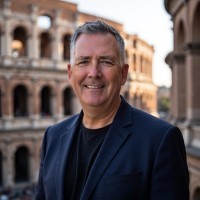
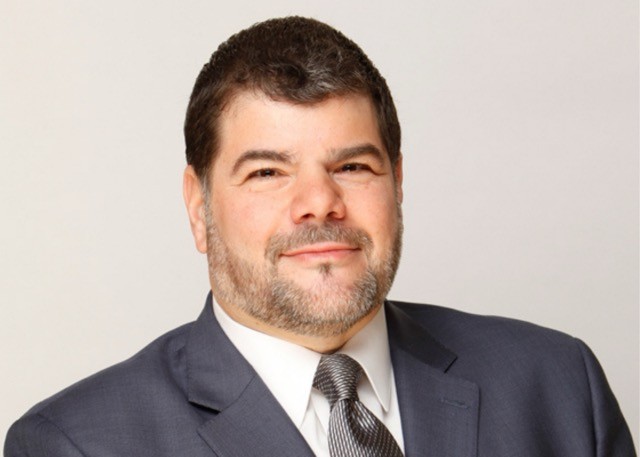
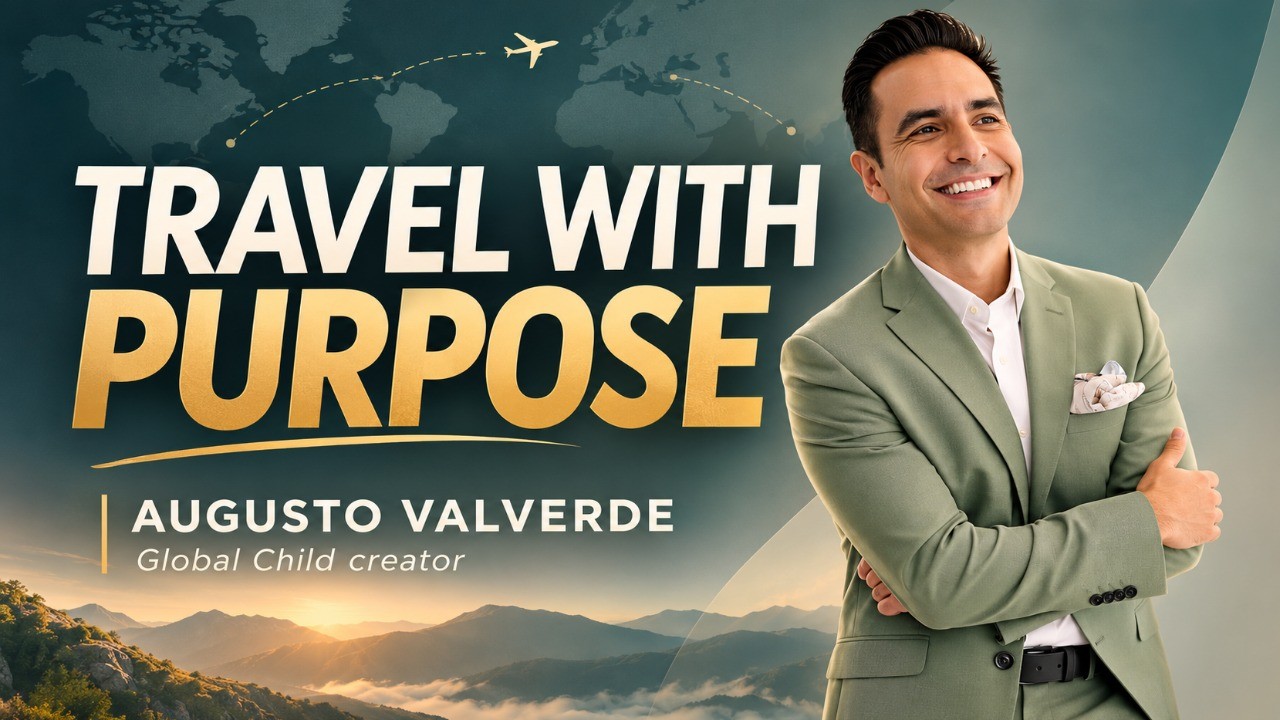
Purpose-driven travel is more than a five-star resort: Global Child creator Augusto Valverde explains how any trip can include a moment of giving back.
Augusto Valverde is the creator and host of Global Child: Travel & Purpose, a travel series that streams on Tubi, Pluto TV, Peacock and major airlines and has passed 850 million impressions in three years. A former Miami party promoter, jail chaplain and NBC Universal host, he started the show with a selfie stick, standby airline tickets and no funding, and now films with partners from the Four Seasons to Andrea Bocelli.
Mike and James talk with Augusto about where the name Global Child came from, the Quechua family in Peru who taught him what travel is really for, and why he thinks the travel industry should build give-back moments into its packages. He also shares how adding value first won over hotels and celebrities, how destinations get chosen and funded, and why Mauritius and Greece top his list.
Resources:
Global Child TV: https://globalchildtv.com/
Global Child on Instagram: https://www.instagram.com/globalchildtv/
Augusto Valverde, PADI AmbassaDiver: https://www.padi.com/ambassadivers/augusto-valverde
Meet Augusto Valverde of Global Child
Mike: Well, welcome to No Tourists Allowed. I'm Mike Putman.
James: And I'm James Ferrara. Welcome back, everyone, and we have a really interesting episode for you today, including a fascinating guest. And I think, Mike, we wanna get to that right away, right?
Mike: Absolutely, let's hop right in.
James: Okay. Well, our guest today is Augusto Valverde, the creator and host of Global Child. I love that name. Travel and purpose. And we're gonna talk a lot about what's in the past decade, Augusto has traveled to more than 30 countries, filming with celebrity guests, and in every episode, he gives back to the communities he's visiting. The show streams on Peacock and Tubi and plays on major airlines around the world, amongst a lot of other places you can see it. Augusto is also a former NBC host, an author, a certified dive ambassador, and the founder of a charitable foundation called The Big Foundation. So we're gonna get to all of that. Augusto, welcome to the show.
Augusto: Thank you. I made that intro quite complicated, so I need to summarize it a little bit more, but it's an honor to be here with you.
Mike: It's great.
James: No, no, look, you've got a lot of things you've been involved with, a lot of accomplishment in your life, such an interesting life. I think we might be a little jealous. And we met you actually through a colleague of Mike's. So I'm gonna let Mike jump in to begin with.
Mike: Yeah, yeah. So it was great to... We have a mutual friend, Augusto and I, David Castillo, and he introduced us over the phone several or over internet session several months ago, and then we actually had the chance to meet in person in Tuscany on a recent trip that we both just got back from. So yeah, it was awesome meeting Augusto. And Augusto, just for our audience, can you just kind of paint a picture about who you are and what Global Child is all about?
Augusto: Absolutely. Well, Global Child is a production company that makes a television program called Global Child: Travel & Purpose. We called it that because we believe that no matter your race, your religion, your country, you're part of the family of humanity. And we have so much more in common as humans than what separates us. So because of that, when we travel the world, we create these beautiful 60-minute shows that stream on all the airport screens of the United States, major streaming platforms like Tubi, which is Fox, Pluto TV, which is CBS Paramount, Rakuten all over Europe and a bunch of airlines and other platforms. And for context, in the last three years, we've been blessed to pass 850 million impressions, which is about $23 million of Nielsen-verified exposure.
So a lot of people are seeing the show. It's a blessing. And because of that, we've been able to give back in all these different places with celebrities like Andrea Bocelli, John McClure, Malkovich, Isabela Merced and so on and so forth. So we travel the world with purpose, we showcase destinations and we always give back.
Mike: Wow. That is awesome. So you have these... So kind of in summary, you travel around, you film these great shows and then you've got a distribution network built in. What are you doing in these shows? What's the storyline?
Augusto: So what's interesting when you create content, these are what I call, you know, legacy media. So they're 60-minute shows. We're not influencers. We work with influencers sometimes, but we do long form. Long form allows you to tell the story. So whenever I visited destinations, I realized that I didn't really understand where I was and what I was doing. And I remember a television show that used to be on CNN called Parts Unknown with Anthony Bourdain. He had white hair. He used to go around the world eating stuff. So he did his show around food. We do it around experiences. So we do the best things to do in each place, which of course does include food and eating, but we'll go skydiving and hiking and we'll meet biologists and we'll scuba dive and race cars and also see a lot of the luxury hospitality world, but we always give back.
So wherever you go, there is always a place in which you can help. You can range from planting a tree in Costa Rica to perhaps like you, Mike, building schools in Guatemala, which you've done a lot of. So that's kind of the ethos of the show.
From Miami party promoter to NBC host
Mike: Right. That's great. That really aligns very much with No Tourists Allowed, which is actually, it is a byline from Anthony Bourdain's show. So great time there. So tell us a little bit about who you are, how you came to this great opportunity and made it so successful.
Augusto: Sure. So I'll give you the very, very abbreviated CliffsNotes version of it, because we even have a book. I wrote a whole book, and if you want to learn more about the story, just Global Child: Travel & Purpose on Amazon, you can find the book. But I used to be a jail chaplain, but before that, I lived the life of just throwing parties in Miami. Miami is a very fun place. I was going to university. I started throwing parties mostly because I couldn't afford to actually go to them and pay for stuff. So I figured if I'm organizing it and I'm getting paid, well, now I can afford it. So within a year, I became one of the top party promoters in Miami that allowed me to network with a lot of people.
And then fast forward two, three years later, it was making, back then, at least for me, a significant amount of money, but it had no purpose. So I started asking the big questions in life. And again, we always say in the show, you don't have to believe to belong, and this is for everyone, but I'm just going to share the way I experienced my life, which was that I prayed and I said, "Hey God, I don't know what you made me for. Please show me. I'm a good communicator. They offer me stuff on TV all the time, but I don't want to do telenovelas, you know. But I just need to find my path."
And within a couple of weeks, they invited me to be on a reality TV show about club promoters of all things. And then managers came, they started repping me. That led me on an adventure where I moved to L.A., the struggling actor life for years. And one day they invited me to a cool church. I discovered some purpose. Started volunteering in the prisons. And then years later, I won a nationwide search to be a host for NBC Universal. So, with that skill set, with my history, I just wanted to do something that had purpose. So, when I started traveling the world, I did it with a selfie stick and no funding. But I noticed that every place would teach me a positive life lesson that applied to all of humanity.
So things like generosity, curiosity, empathy, things that I think are being lost a little bit in the shuffle of society now. And I would just embed that into the show. And then it grew. The first episode was half-an-hour shows with no production budget. For two years, I didn't make a dollar. And then I started doing these things that had increasing risk just to make better television, like climbing Mount Kilimanjaro or scuba diving with bull sharks with no cage. And then of course, we did the fun stuff like working with the Four Seasons and visiting orphanages. And over time, the show matured. The format became what I envisioned and also took on a life of its own.
And yeah, now we're very blessed to be able to reverse engineer these stories. And then we can, because, you know, Mike, you can tell a story many ways. And the same way you can use a piece of chicken and make all kinds of things from a chicken burger to a beautiful Caesar salad. It's just what do you want to create?
Growing up in Mexico and working on a cruise ship
Mike: Wow. Yeah. Right. Is, that's really cool. Well, tell us a little bit about even before that. So, where did you grow up? Did you travel a lot as a child? What was your spirit that drove you towards a travel show as your platform?
Augusto: I was born in Miami, Florida, and my parents are from Mexico and Spain. And then we moved to Mexico when I was three years old. So I did the reverse thing that a lot of people do. And growing up in Mexico City, I went to the American school, which had people from all over the world. So that gave me my first taste of, let's say, international culture. We traveled not extensively, so a lot of times to the U.S., back to Mexico. And I never set out to really be a traveler, but I had a curiosity about things. So whenever I was in the city, I would love to walk around and find different restaurants to eat at.
And I like exploring and asking questions, but I had never really pinpointed that I wanted to travel the world. And when I was 18, I graduated. I did a year abroad in Canada as an exchange student, which was very exotic for me being from Mexico. It also taught me that I don't want to live in the cold. It's freezing, you know, having to walk in -20 degrees to school, it was rough. But it did allow me to interact with other cultures. And then once I was 18, graduated from high school, a lot of my friends, let's say they had wealthy parents that sent them on a year abroad. My parents couldn't do that at that specific moment.
So I decided to go get a job on a cruise ship, because it was the closest thing I had. And I walked in, landed this job, and I said, "Well, guess I'm a man, I'm 18, like, if my parents can't afford it, I have to find a way." So I started working on this cruise ship. It wasn't glamorous at all. I mean, I'm sure, I don't know if the audience knows, but like, the workers of the cruise ship live in these cabins within the ship with no views. And you have to work seven days a week. You work usually six months at a time with very little breaks. So it's not glamorous.
But to see the world at work. So my first port of call was Sweden, and the ship went Sweden, Russia back then, England, so on and so forth, Morocco. So I would have usually a couple of hours during lunch free. I would get off the ship with my little backpack and just randomly walk. That gave me a taste of the world, but I always felt like I was eating like little appetizers. And then I remember one time, after doing the struggling actor life for a long time, I prayed again and I'm like, "God, I'm so grateful for my life. I like living here in Hollywood and Miami and these things that I'm doing, but I see these people do these amazing vacations and they'll go for a week to Tuscany," as Mike just did, and I was blessed to see him over there.
"Or they'll go to, you know, the Bahamas, and I don't do those trips." So I said, "If you can arrange for me to travel, I'd really appreciate it, but I'm grateful for my life." And then Christmas Day, a buddy of mine calls me and he says, "Listen, I have a Christmas present for you. I'm going to give you tickets to travel the whole world for free." Turns out that he worked for an airline. His girlfriend had the same job, so they both had a plus-one benefit that they didn't need to use. They gave it to me, and so I started traveling, not glamorously a lot at all, always on standby, but I could fly Miami to London for $80 on standby.
I could do Miami, Dubai for a hundred bucks. So with that and the selfie stick, that's how we started making the show. And it kind of started leading us to what then became Global Child.
Mike: Right.
James: Wow.
Mike: Yep. Yeah. Well, interesting.
How the name Global Child was born
James: Well, you have a cute story too about how you got the name for your show and your book. Can you tell us that?
Augusto: Yes, of course. So, at that time I did the struggling actor life for a while. I was a jail chaplain and then I was working for NBC Universal. And one day I'm in the elevator and I'm going to a meeting, and my ex-girlfriend and I had just broken up. And I remember being in the elevator and I said to myself, "Well, at least I still have my job," as I'm going in the elevator. And this little thought crosses through my brain and it says, "They're going to fire you today." So I'm like, "Why? I've done a good job and I just heard I'm promoting you." So I'll leave that for the audience to kind of like figure out on their own.
But that day I got fired, but I had heard that little voice, so I felt like something good was gonna happen. So I get the tickets on Christmas Day, I start traveling the world. I find myself in Sweden. I'm in this nightclub line of all places, and there's this Turkish guy that I know from my Miami party days. So I ask him, I'm like, his name is Yigit. I said, "Yigit, where are..." "Oh, well, I was born in Istanbul, but I grew up in Miami, LA, New York. I'm a global child." So as soon as he said, "I'm a global child," got it, because I was a global child too. And I realized that most of us, nobody is from one place.
You guys know what I mean? Like, Mike, where are you from?
Mike: Yeah. I'm from Greenville, South Carolina.
James: Yeah.
Augusto: Yeah. And you, James?
James: Well, I'm from New York originally, but I've lived in La Jolla, California and Boca Raton, Florida. And I'm talking to you from East Hampton, New York, so I don't know where I'm from really. I'm a global child.
Augusto: And you are a global child. And you know what happens, all of us, if I go back, even like your parents, they're usually not from the same city. And if I go, your grandparents, they're certainly not from the same city. And if I go back further, they're usually from other countries. So in essence, we really all do come from multiple places. Like, we are all global children, and we are part of the family of humanity. If you've ever flown internationally, it's very rare that you can actually see the borders you're flying over. Most of the time, there's just hills and you're in another country, another country. And the higher perspective you have, the more you realize that we have so much more in common than what separates us.
So, yeah, so that was the name of the show. And then I also noticed, like, okay, so a child has curiosity, they have energy, they have joy, they don't really have malice, they have a level of innocence. So yeah, so I think Global Child works on multiple levels, and can't say I had the vision for it, but I do know that sometimes your gut instinct is correct. And in this case, the name really has panned out over the last 10 years that we've had the company.
What it means to travel with purpose
James: That's right. Yes. Great. So people, you say travel with a purpose, and I know you gave us a couple of quick examples. I'd love to expand on that because I think this is something that many people are thinking about. Many people are thinking about, "I want to spend my money with a purpose." And certainly, "I want to travel with more of a purpose," especially in this world of overtourism, and we hear from the people of Barcelona and Venice and Hawaii and a number of other important places in the world. So instead of being a tourist and overtaxing resources and not seeing much authentic either, by the way, there is another way to travel and another value that people like you can provide.
Talk to us about that a little more. What does that look like to me as a traveler if I'm traveling with a purpose?
Augusto: You know, I stumbled across this first in my jail chaplain days because I wanted to give back, but the world doesn't always make it easy for you to give back. And so once I connected to the prison ministry, I realized that that fulfilled my soul so much. And then when we began to travel the world, even with a selfie stick, I noticed that life gave me these opportunities. I'll give you an example. I was in Peru, and we hired an excursion to take us through the Machu Picchu hike and a trail. So it was kind of like glamping in a way. Started raining, we didn't really plan for it. I couldn't afford a jacket.
I had some alpaca sweater that they told me was impermeable. Never do it. So now there's no shelter, I'm freezing, and we find this hut in the middle of the mountains. And so this old Quechua lady that doesn't even speak Spanish greets us, and it's like dirt floors. She had one tin cup and a little fire. And so she gave me a little tea, we dried up, and the only thing I had was some cookies in my backpack. And I gave her those cookies, and she was so happy, and we didn't speak the same language, and we had a moment. Today I'm telling you about that story. I'm not telling you about the five-star resort I stayed at, which was still nice.
But I think what I realized is there is an issue in purpose-driven offering for travelers to be able to do these activities in a simple form. Why? Because typically, I guess we just decided arbitrarily that if the tour has purpose and it helps, audiences won't like it. Maybe it requires just a little extra work around it. But when I would make these shows around the world, there were always people doing good. And so what we would do is I would talk to the tourism board or the five-star luxury hotel. And if I just ask two questions, I'm like, "Do you guys give back? Is there a cause around here that's worth it?" There was always something a stone's throw away to do.
So we would film this, and then those were the most meaningful moments for me, for the crew, for the audience. And I realized that really most of the stuff that I would see on television was like the super beautiful couple staying in the five-star places, and I'm like, there's something that kind of rub me a little bit the wrong way, because there's a lot of poverty. But on the other side, if you just go to the poverty sad documentary, I just don't want to watch it, and I turn it off and I'm like, "I don't want that either." I think most of us exist in this middle ground where, "Hey, I want to have a beautiful vacation according to my preferences, but if I can give back one out of, or half a day or a quarter of a day even, I would do it."
And then what happens is like a lot of people, you know, we... Philanthropy is woven into our souls so that when we do philanthropy, we feel good. And there's nothing wrong with that. It's the way your soul is wired. It's the same reason why when you give a gift, you feel good. It's the same reason if you're a parent, you surprise your kids, you're happy. Or if you take your wife on a beautiful date and she's happy, it's wired in humanity to give back. So I think that conversation is a two-pronged approach. And Mike and I, like, we spoke about it during the conference we attended in Tuscany. I challenged all those people that work in the travel industry.
I said there's not enough companies creating packages that include a give-back component. Doesn't need to be all your trip, but as you start customizing these travel packages or the tours that you book, if you had a tour in Costa Rica to plant the tree, you would probably go. If it was simple for you, it wasn't that expensive and you gave back and it was safe, you would go. The same way to visit the school: sometimes they'll do this in a safari and they'll stop at the village in the Masai Mara and they'll do it. But these are the most meaningful moments. So I think there's a place there where I hope that Global Child can enter, to be able to create these purpose packages where you can go and book activities and give back.
So we've been doing that in the show. I'm still trying to figure out how to make it mainstream so that audiences can also have the same amazing moments that we've had on camera.
Adding value first: hotels, celebrities and Andrea Bocelli
Mike: That is really awesome. You've had the opportunity to work with some very famous people. How did those relationships come about? And did they carry the same mission focus that you do?
Augusto: The short answer is life taught me that I have to add value first, always. And I think what that looks like is, because I didn't have funding for the television program, I had to find a way to get people to want to work with me. And you can either ask for charity or you can find a way to bring value. So in my case, we all have different skill sets. I'm good at telling stories. I had to learn how to edit because I couldn't afford an editor. And so, like, I started forming these partnerships where I would think even from the hotel side. I'll give you an example. We started filming with hotels, and your traditional television show, even if they do, let's say they stay at a hotel and they do a trade through exposure, they'll never give them ownership of the footage or co-ownership of the footage.
I started looking at my hotel partners and I said, "Well, how does the damage mean to give them all the raw footage so that they use it?" So that they don't make their own TV show, but they can use it for their own websites, for their social media. So I started telling the partners like the Four Seasons, the Atlantis, all these five-star hotels, "Hey, also besides the show, you can have ownership of all the footage." And it was just an act of generosity that meant a lot to them, and it separated us from our competitors. Same thing with the tourism boards. Sometimes you'll have a big TV show, they're divas, you can't see the show, you can't have an input into the show, you can't have any of the footage.
And then the more I realized, I'm like, "No, we can give, we can give more value." So they started forming the partnerships, and then, because we started helping charities, a lot of these celebrities, for example, Andrea Bocelli. Andrea Bocelli is one of the most renowned artists in the world. He's the number one selling classical artist of all time. He gets paid something around, don't quote me on this, but I think like about $3 million for two songs. And he fills arenas, he just opened the World Cup, et cetera. But he has a foundation called the Andrea Bocelli Foundation. And so through a friend of mine who saw the show, he said, "Hey, I have a relationship with the Andrea Bocelli Foundation.
"Maybe they would want to be on your television program." And then we reached out, that initiated a conversation. And then next thing you know, we're filming with Andrea Bocelli at his home in Tuscany. He's riding horses blind, which blew my mind, and the audience can see. He rides horses blind and does tricks like I'm afraid to even gallop. He's galloping, doing tricks, blind. And he's also one of my heroes, right? And so those kind of moments are really priceless. But celebrities want to participate because we give back, and they also have causes that they give back to. So we parlay our global audience to showcase them and the causes that they care about.
How Global Child picks and funds destinations
Mike: Yeah. Oh. Interesting. Really interesting. So how do you like pick destinations? How do you come up with these ideas of where to go?
James: But.
Augusto: Well, I think it's a three-pronged approach for us. So number one, we have a marketing director who is always looking for the right destination that wants to partner with us. The shows now, it's a big production, right? So you have teams of eight people. You have more than 15 streaming platforms. Every time we make a show, it reaches about 50 million impressions, which is like $1.2, $1.3 million of verified exposure. All this to say, somebody has to pay for all that staff and all that crew and all those things. So when you have a TV show, you need budgets. Usually, the TV shows, they already have the budget for the whole season, which makes life easier.
So then, you know, CNN gives you the money or the BBC or Netflix. So then they go and they film. For us, because we're privately owned and we also want to keep our creative liberty, yeah, we have to find the clients and then we go to the places. Then sometimes opportunities come where, for example, I don't know, Tanzania isn't really going to afford to be able to pay you for the show. So you find a philanthropist or a sponsor or someone who really wants to make the show, promote these causes and helps us to offset some of that production budget. So maybe it's, I don't know, a fifth of what the tourism boards would pay.
It usually helps us to break even. Then we make a beautiful show and everybody wins. And then last but not least, we also just find opportunities where we get these celebrity invites, which really are kind of priceless. So in that case, we kind of bite the bullet, take a loss from our financial place, but then we grow the brand, we grow the impact, and then I know eventually, you know, we'll get that funding back elsewhere.
Mauritius, Greece and favorite destinations
James: Sure. What's a favorite of yours in terms of destinations and the show experiences? Give us a top one for you.
Augusto: I'll give you two, and for two different reasons. The most exotic one that I would recommend that really surprised me was Mauritius.
James: Oh, I thought you were gonna say Canada. You're...
Augusto: Yeah, Canada. Canada in the winter in February.
James: The only person who's ever used exotic and Canada in the same sentence.
Augusto: No, no. So Mauritius. Mauritius is a beautiful island. A lot of times, myself included, I don't do too much research sometimes before I book places because I want to be surprised. But people think that Maldives and Mauritius are similar. Maldives is beautiful, but it's just transparent water, sand and your hotel, which is nice if you're going on a honeymoon. But if you want a more broad experience, Mauritius has mountains, waterfalls, dolphins, the same beaches, but it's an intersection of different cultures. It was part of the trade route between India, China and Europe. So you have a... It was a French colony, so a lot of that French, the food's amazing, some of the locals.
You have the hospitality that Indians provide. India is very known for its hospitality and its cooking. And then you have China. And so China used to bring all kinds of exotic elements to it. So all that together in Africa, you can imagine it creates for a pretty unique travel experience. And then on the other side, I would just go Greece. Greece has over 150 different islands. You can do it really low budget, really amazing. They are to me some of the most generous people in the world, safe, beautiful, fun. You connect their ferries, you don't need to spend an arm and a leg, and you can have the best travel experience.
So depending on your budget, I think those two would be my options.
Filming in Miami Beach and Saudi Arabia
James: Yeah. Yeah. Great. Mauritius is a really important destination for us these days on the travel selling side. Yeah. Terrific.
Mike: What destinations do you have coming up next, Augusto?
Augusto: Well, next, I'm honored to be filming here in Miami Beach. I'm based, I'm currently coming to you live from Miami, Florida. And we're doing our first Miami Beach episode. And I say Miami Beach because, I don't know if the audience knows, but there are different cities. Miami Beach is a different city from Miami. So in Miami Beach specifically, we're doing a beautiful show where we're filming with the World Polo League. They're playing polo on the beach, on the actual sand. That's gonna be a great event. Then there's a gala for a nonprofit called The Aerial Recovery. They help veterans find their purpose again, and then they deploy them on missions to rescue children from trafficking all over the world.
So we're gonna have a beautiful gala on November the 12th. Mike and James, you're both invited, so you're gonna get my official invite once we hang up. But we have a beautiful gala.
Mike: Well,
James: I was just there last week.
Mike: Great.
Augusto: Yes. Yes. So now you have another excuse to come back. And I'm hosting the event and we're filming it for the television program. And of course scuba diving and all these great things. So Miami Beach is coming back, it's coming up. We also have, we're filming in Saudi Arabia very soon. They have a place called Jeddah, which is a city by the ocean. It will be the equivalent to kind of their Miami. And there's this beautiful real estate project on the water called Red Sea Global. So in Red Sea, they launched already 87 or so hotels. And they have some of the most pristine corals, and they focus on what we call regenerative travel.
So you go and you actually regenerate both the environment you protected and yourself. So I'm really excited to tell that story.
James: Great. Great. Yeah, also becoming a very important travel opportunity for people, Saudi Arabia, you know, who's still working on opening it up, and experiences like that would be amazing. So we'll look more into that.
Augusto: Yes. Yes. And let me just quick question for both of you. What's your top destination if you had to say one? Because I gather you guys have traveled more than me.
Mike: Yeah.
James: Go ahead, Mike, you...
Mike: So I have two. One is, and they're not overly exotic either, is Jamaica, is my beach chill-out thing. I've got a lot of friends there, I know my way around, just feel very comfortable there. So if I wanna go somewhere and relax, it's that. If I want kind of more of a city-type adventure, London's just my favorite city in the world. So.
James: Yeah. Look, asking me that is like asking me which is my favorite child. It's an impossible question for me to answer, and in some ways the next place I go is my favorite place, because there are so many incredible places in the world. But certainly amongst my top would be London, also with Mike. It's like a second home to me. I'm heading there in a couple of weeks. And Paris is another big favorite of mine. But I really feel like I'm cheating on all the others to even mention just two, because I mean, this country, the United States, is full of incredible destinations. I happen to love Canada, although not exotic, but I love places in Canada.
I did a cruise up the Eastern Seaboard to Halifax and St. John's. It was just gorgeous, you know. So it's not necessarily the place for me, but it is the experience. It is the sense of something authentic and the sense of wonder and the sense of purpose. Boy, if you can add that element to your trip. I was recently in South Africa and went to someone's home, and we helped them cook for local children and families who need food. And it was such a like an experience of community, I'll never forget it. And I know I saw a lot of beautiful places when I was in South Africa, but I will never forget that moment, that moment.
Augusto: What? Yeah. Clue. Yes.
Where to watch Global Child
Mike: So Augusto, if there are people who want more information about Global Child or want to learn about the show or maybe how they can participate, what kind of advice would you give them?
Augusto: I knew. Well, number one, our social is Global Child TV. We'll be right there. We're posting things there all the time. If you want to see full programs, which is actually a great idea, it's a great way to get ideas on where to visit and how to travel with purpose. On Tubi, you don't even need a subscription. You just go Global Child on Tubi. It's a free app. Pluto as well. Or you can even use your smart control. It'll lead you to some places. But yeah, I think for us, we're happy to point people in that direction. We're also going to have some big news coming up. We're going to be launching our travel club, which is a subscription club where people are going to be able to book some of these purpose experiences, get amazing discounts, 30, 40, 50% off of the price of competitors like Booking.com, et cetera.
And then also, we're going to have some surprises. You'll be able to do monthly Zooms with me. We'll give you some access to insider trips when we do missions and charity trips a couple of times a year. If you're part of that community, you'll be able to come with us as well. So a lot of good things that we're working on, but you'll find out more if you connect with us through socials. Would be the best way, Global Child TV.
James: Excellent. Well, it's been wonderful to talk with you. Thank you. I'm envious of a lot of your experiences and the purpose that you found in life. So thank you for joining us.
Mike: Yeah, thanks so much, Augusto.
Augusto: Of course, and a little invite to the guests and everybody watching. If you have ideas on places that we should film at and causes that we could support, please just send us a DM and we're happy to explore.
James: Great. Thank you so much, Augusto.
Augusto: Thank you. Thank you, guys. Bye.
Mike: Okay, that was great, great time with Augusto, and what an interesting story, James.
James: Yeah, like I said, I'm jealous of his life. So adventurous, interesting, purposeful, feel good, love all of it. And he's going to some pretty great places, all of which are available through your friendly local travel advisor, I just want to point out.
Mike: Yeah, that's right. Absolutely. Yeah, so good. So I think that's gonna wrap us up for this week, James. So we look forward to speaking.
James: Yeah, we'll save what else we have, I think, for next week, 'cause we've used up our time.
Mike: Yeah. Yeah. Yeah, we've got another interesting guest next week. So please make sure you tune in for that and share the news of our podcast with your friends. And let us know if you have any feedback. We'd love to hear from you. You can just go to notouristsallowed.com, and there's a form you can fill out, and we'll be glad to take some of your questions on air, or if there's some topics you want us to cover, please let us know. So thanks so much for listening in, and look forward to speaking to you again next week.
James: Yes. Thank you, everybody.
Credits
No Tourists Allowed is produced by Podcast Studio X and is powered by BuzzyPod.