Global Destinations

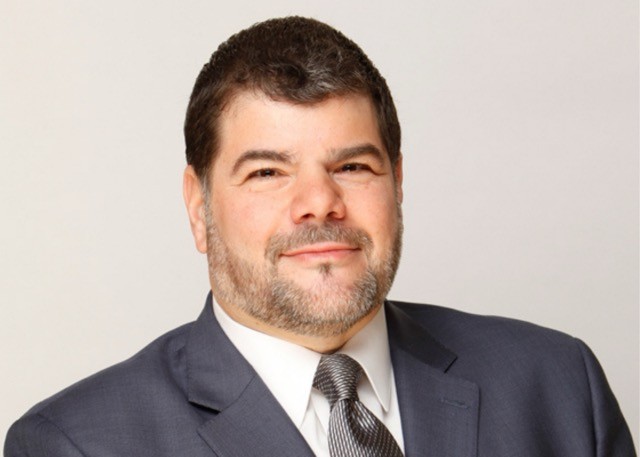
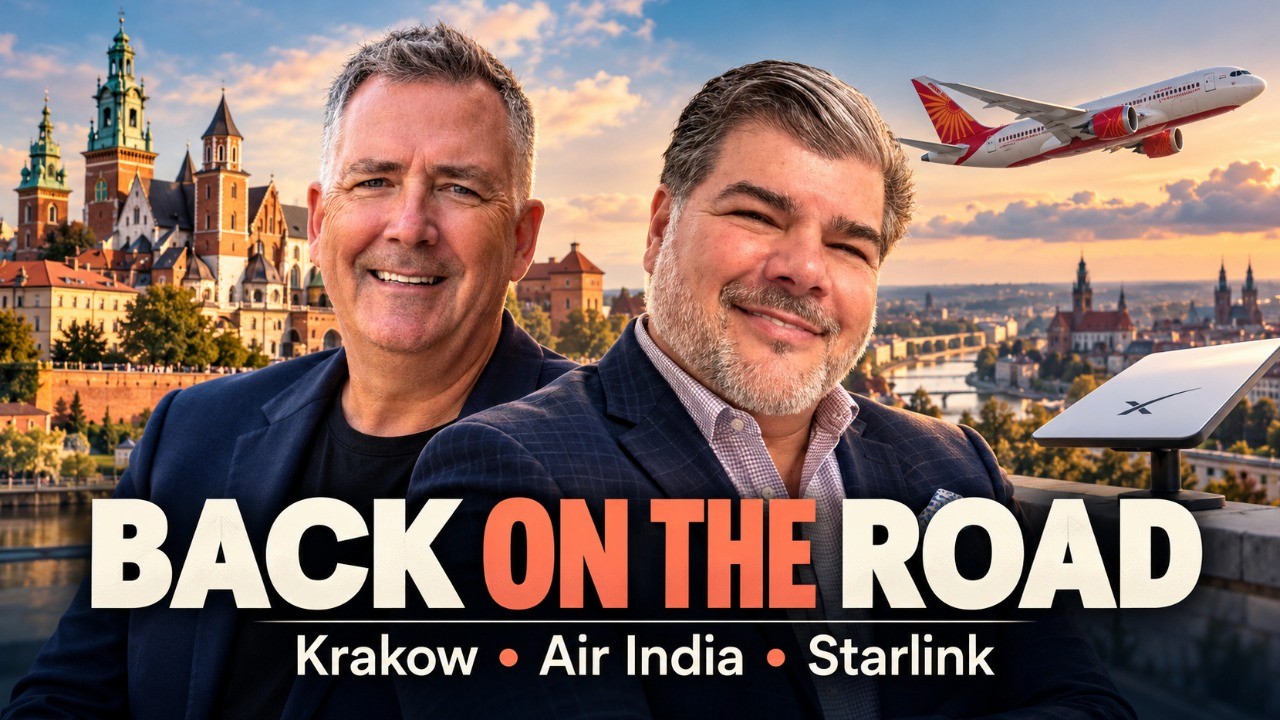
Fresh from InteleTravel's European conference in Krakow, No Tourists Allowed hosts Mike Putman and James Ferrara report on Poland, India, Miami and the perks reshaping premium air travel.
Mike Putman and James Ferrara bring a combined 71 years of executive experience in travel and technology. After Krakow, Mike flew on points to India, then Jordan, Rome and Florence; James visited Auschwitz and Birkenau, flew home in Lufthansa's new first-class cabin, and went on to Miami.
They cover why Krakow has become a crowded European city break, and why a quick tuk-tuk tour should be followed by a walk, with VoiceMap's self-guided GPS tours as their pick. Mike explains how Seats.aero found him a business-class seat on a transformed Air India and a 42,000-point flight from Amman to Rome on Royal Jordanian. And the hosts weigh whether free Starlink Wi-Fi on United and American could cost Delta business travelers, as lounge networks expand to fight overcrowding.
Resources:
VoiceMap self-guided audio walking tours: https://voicemap.me
Seats.aero award flight search: https://seats.aero
Visiting the Auschwitz-Birkenau Memorial and Museum: https://www.auschwitz.org/en/visiting/
Connect with us:
Website: https://notouristsallowed.com/
YouTube: https://www.youtube.com/playlist?list=PLNpxeFa-TrEKgSnt1Fl1AnR0E2ao99lWi
Apple Podcasts: https://podcasts.apple.com/us/podcast/no-tourists-allowed-an-insiders-guide-to-travel/id1616076081
Spotify: https://open.spotify.com/show/3Tpo6b35qFeR3lk0c3X6ya
LinkedIn: https://www.linkedin.com/company/no-tourists-allowed
Newsletter: https://notouristsallowed.com/newsletter
Krakow's charm and its World War II history
Mike: Hello, I'm Mike Putman.
James: I'm James Ferrara. Welcome to No Tourists Allowed.
Mike: Yes, we've got a lot of stuff to cover today, James. Been a busy last few weeks, which we have been podcastless, if that's a word. So we haven't been here with you guys; we have been on the road. Yeah, we just had a trip to Poland for InteleTravel's European Annual Conference. So that was my first time going to Poland. How about you, James?
James: But for good reason. It was mine too, and it was pretty eye-opening. Particularly, we went to Krakow. Of course, there are other places in Poland to go, but Krakow turns out is a big, I don't know, what would you call it, Mike, like a city break destination in Europe. There were people from all over Europe, and it was very lively, very crowded, and it's a bit like Disneyland in the southern of Poland, near the border with Germany. And it was a surprise to me. I mean, I've always heard of Krakow, but never in the context of like, hey, that's a place where we should go. But it's architecture, big cafe culture, right? In that there's just outdoor cafes everywhere in the main square in Krakow, which is tremendous.
It looks like Red Square in Moscow. It was ringed by a thousand umbrellas and tables. People just enjoying the sort of Indian summer that we were having while we were there. And the outdoors and watching the world go by and the food, very good food in Poland, and 1,500 years of history. So I think it was delightful, really.
Mike: Yes, there's a lot of tourism, inter-European tourism there, and I think probably fueled by there's quite a few low-cost air carriers that fly into Krakow. And so whenever that happens, all of a sudden, tourism kind of bursts at the seams because in Europe, specifically in Europe, there are low-cost carriers that are still you flying for $20 one way in some routes and, you know, some ridiculous prices trying to get people from A to B. And so whenever you get a congregation of low-cost carriers, you're gonna have some increased tourism. And it is one of the more popular European destinations for inter-European travel that showed up in the stats.
James: And it ticks all the boxes, right? So when you think of a European city destination, it has a beautiful river that flows through the middle of it. It has a thousand-year-old castle up on the promontory. It has medieval walls around the city with beautiful medieval gates. It has several churches and basilicas, right, with incredible interiors. It has all kinds of interesting architecture and palazzos and so on. It has a Jewish Quarter with beautiful architecture and sort of artsy vibe, young vibe in the Jewish Quarter. It has also a, I don't know, what would you call it, a little bit of a sadness, a little bit of a haunted history from World War II. And that's pretty pervasive.
Everywhere we went in Krakow, people talk about it, which I think is good. There are, I think I saw six historic synagogues, but rather telling, only one of them is still a synagogue. The other five are either just historic sites or cultural centers or markets. They're not operating synagogues anymore because during World War II, what was probably almost 2 million Jews in Poland before the war became zero after the war. And it's tragic and horrific, but they do speak openly about it, but I just found that it pervades the atmosphere a little bit, felt a little haunted to me. And that was underscored in a big way. On the last day, I visited Auschwitz and Birkenau, the two concentration camps near there where the Nazis carried out a large part of their extermination program.
So this is not a fun day, of course, by any means. However, a very important day. And I will say this, it was emotional, but it did not defeat me because that historic site was filled with people, and the people were young students. So there were school trips from all over Europe. I met a big bunch of Italian high school kids, and there were kids from all over, and that in fact uplifts me a bit because they understand these school systems, these cultures around the world, understand how important the site is and that kids see it and understand it, because to know what happened there is to never forget, and to never forget is what keeps us from allowing it to happen again.
Krakow's vodka-factory hotel, salt mine and food
James: So look, all told, there were some very bright spots in this trip too, right? We went to some very interesting places, including the hotel that we stayed at was a well-known former vodka factory. And it included a vodka museum, which I thought was pretty funny, which was actually a pretty elaborate interactive experience about the discovery and the making of vodka. And vodka, though I think we tend to associate it with Russia, was actually created for the first time in Poland, is very much a Polish product. And so there was a vodka factory in our hotel, and we had a party one night in the aviation museum, Aerospace and Aviation Museum. Another night in a former train station, train shed in the Jewish Quarter, historic building.
So pretty cool, right, Mike?
Mike: Yeah. Yeah, yeah. And the day I got there, I went to, there's a very famous salt mine. And this salt mine is just really fascinating. It's been operating since the eleventh century, excuse me, the twelfth century. And back then, of course, salt was a very valuable commodity before, of course, electricity and refrigeration. This is the way you were able to preserve food. So there were all these comparisons between salt and gold and the value and how, you know, we kind of take salt for granted today, but there was a tremendous mining operation just outside of Krakow. The interesting thing to me was they had 400 kilometers, so call it, a little over 200 miles of tunnels through the salt mine.
And there's a lot of just really beautiful carvings in there. They had carved actually a couple of churches within the salt mine out of the walls of salt. Very, very pretty. So if you ever get over to Krakow, give that a shot. And I'd also say that the food scene was surprisingly, I would call it continental. I was kind of expecting everything to be Polish pierogies and, you know, which are potato-filled empanadas or
James: Oh, right. Yeah. Dumplings.
Mike: Dumplings, yeah, yeah, dumplings. And so there was plenty of that and plenty of, and
James: Yeah. I had too many pierogies, Mike, I must admit.
Mike: And lots of borscht and all that kind of stuff that you would associate with Eastern Europe, but there was a pretty active food scene. One night I went to a Thai restaurant. It was a Michelin-recommended, it did not have a star, and it was actually really good. I mean, I wish we had something quite that good here in Greenville, but very good. And then I think the first night we were there, we rented out a section in a restaurant where we had a dinner for 15 or 20 people, and that was a Michelin-recommended restaurant as well.
James: Yeah, it was very good. On one night, I went to the oldest restaurant in Krakow on the main market square, and there's no way I'm gonna pronounce this correctly. It was called Wierzynek, but it's the oldest restaurant in Krakow. Very romantic and beautiful inside. Great food. I had a venison goulash there. So you can look that up. Also, we stayed, as I said, in this kind of factory-chic hotel, like industrial-chic hotel, the Mercure in Krakow. And the food was very good there, and the rooms were very modern but very, very, very nice. Great, great hotel with a number of restaurants on the property and a big convention center on the property.
So the Mercure in Krakow.
Mike: Yeah. Yeah.
James: We would recommend. It's a little outside the historic district, but that's probably what you wanna do because being in the historic district is a bit like Times Square in New York. It's quite busy, quite frenetic. So great, great visit, and so happy to have gone someplace I've never been before.
Krakow trams, tuk-tuk tours and VoiceMap
Mike: Yeah. Yes, it was really good. And the public transportation system there, I don't know if you got a chance to use it or not, was really good. They have, like in a lot of European cities, they have these trams, which are above-ground trains that run on a circuit. And very modern way. You could buy tickets. No, actually, when you were on the tram, you just used your phone to tap or a credit card, and it charged you two euros. It was really good service, and it took you pretty far distance, and I felt like we're doing good for the environment by using public transportation.
James: Yeah. I did a tuk-tuk kind of tour when I was there and used them a couple of times. These big golf carts that seat like six or eight people. And so it's a good way to get around because some of the roads are very small, some of the streets are very small, they don't go very fast. I kept wanting to like sort of pedal faster. But one thing I'll say, this is a good No Tourists Allowed point. There are pluses and minuses to that kind of tour. The plus is that you get to see a lot in a short period of time, and they can sort of hit all the highlights with you. The minus is they don't like you to get out of the tuk-tuk.
So, you know, we're driving around and there were things that were interesting and sort of go by quickly. I said, wait, can we stop and take a photo? And the driver wouldn't say no, but he was clearly slightly annoyed by it because it just takes more time for him to complete the tour. So as a sort of first pass to get your lay of the land and see where some of the big sites are, yes, it's a good idea, but you need to go back and walk and actually go into things and stop and take pictures and smell the roses, you know.
Mike: Yeah, that's why I love VoiceMap. So, and we had the VoiceMap CEO on a few months ago. And I was able to do a VoiceMap tour there, as well as I went on to Florence and did a couple. And I just love the product. I mean, I can't, like, the guy's not paying us, but it's something I really endorse. It's walking tours. You download the app, you buy the tours, the tours are, you know, $10 to $20, and once you get the app, you choose which tour, and there's multiple tours in most markets. I think in Florence there are about 15 or 16 tours, and you
James: Yeah. Yeah. Yeah. And they're done by experts too, by like local experts, you know.
Mike: Yes. Yeah, yeah, and you download the tour that you like, and it tells you where to start, and you start walking and put your AirPods in, and you can tuck your phone in your pocket and just walk, and they'll tell you exactly where to turn, and they're using GPS, and you get really close to sites, you get a little bit of exercise, you can pause it whenever you want, and oftentimes they'll say, go into this little cafe, ask for the owner, his name's George, have him make you a special frappuccino or whatever the case may be. Just a great, really, really great tool.
James: Yeah, that's one of the No Tourists Allowed best-of segments. Along with the vest. Remember the guy with the vest, you know?
Mike: Yeah, the Flygaroo packing vest. Yeah. Yeah. We never got any of those products either, so we should get some kind of endorsement fee. But no, and actually when I was in Florence, I was there by myself for a couple of days, and have a thing where you can pay, I think it was $24, and you get all the tours that you want, so I kind of took advantage of that. Yeah.
Flying business class to India on points
James: No. That's cool. But before you got to Florence, you were quite further away, weren't you?
Mike: Yeah. Yeah. I was trying to travel in business class, and I was trying to travel to India using points and also trying not to kill myself getting around. So what ended up working for me was I ended up getting up early one morning, the day James went to Auschwitz, and taking a train from Krakow... my mind just went blank.
James: Let's go to Munich.
Mike: No, to the capital of Poland, Warsaw, thank you, to Warsaw, and then I got on a flight from Warsaw to Frankfurt and then Frankfurt on to Mumbai, which used to be called Bombay. But the interesting thing was, and here's another little plug, I use a service called Seats.aero, A-E-R-O, which is a great service if you're trying to use frequent flyer points to buy tickets. It compares different routes and gives you what it costs in points, and then it gives you some strategy around should you use American Express points, should you use American Airline points or what have you, what's the best value. At any rate, the only flight that kind of made sense was an Air India flight.
And so I was very, very hesitant about going to Air India, and I just didn't want to do it. James, one of our mutual friends, Rupak, had told me he had been on Air India one time and it wasn't so bad. So that gave me a little bit of confidence, but I was really concerned about it. Anyhow, long story short, I get on the plane, it's a 787, which is my favorite airplane. Sit in business class, lay-flat seat, and it was one of the best airline experiences I've had in my entire life. I mean, this, a private group led by Tata bought Air India.
It was a government-owned company. They bought it, they transformed it into something that's just... the service was exceptional, the food was exceptional, and it was like a Singapore Air, Thai Air, just really high-quality service. And so something that I was dreading, I actually ended up having a wonderful, wonderful trip. So I went to India, have an office, got a car from Mumbai to Pune, and then spent a few days with the team there, and then flew back from there to, of all places, Amman in Jordan, which I was a little nervous about, to be candid, but it was the least expensive way to get to Rome, which was my destination, by using points and also sitting in business class.
So I was able to do that for 42,000 points too, by the way, which is not a lot of points. Yeah, so, and really great service on Royal Jordanian. Got to Rome, got on a train and took the train up to Florence, which was also another amazing experience. I love being on trains, and I was in the executive coach, and there was only one other passenger in that coach, and it was a really great trip. But my first time to Florence, had a wonderful couple of days, and then had another event in a castle called Castel Monastero and just south of Florence. Beautiful location up in the Tuscan hills, sitting on top of a mountain range, and just had a really, really good experience there, a couple of days of meetings but a little bit of time to unwind. But
James: Mike, you didn't tell us about the food in India. Do you have anything good to say?
Mike: So here's my situation there. I wasn't feeling good when I got to India, and it wasn't because of the food in India because it happened before I got there. So I was really super cautious, to be honest, and so I did not get very adventuresome in India. We had a team dinner out one night, and I kind of passed on the food, and I had taken some protein bars with me, so I kind of lived off protein bars for a few days, to be candid, with the exception of breakfast. I was just a little concerned, and I knew I had this event I needed to go to in Italy, and I didn't wanna be not feeling well there, so
James: Gosh. But I love Indian food.
Mike: Yeah, it was tough, but I did pass it up, and much tougher than if I'd had some, but yeah.
Lufthansa's new first-class suites and seats
James: Well, speaking of air, I flew back from Krakow. You can't really get nonstop back to the States anywhere, but I flew to Munich and then from Munich back to the States on Lufthansa in their new first-class seating. And everyone's doing this. Even United, I noticed here in the States, is doing it. Maybe you know about other airlines. But they're stratifying first- and business-class service now with sort of upgraded options even within business class or first class. In my case, and I've done this before in Lufthansa, they offer in the cabin, very big first-class cabin, they offer at the front two individual suites, which are rooms with doors that close and 42-inch televisions and day beds and cocktail table. It's like a little room, and they have two of them.
And then they have a number of these, they're not, the walls don't go to the ceiling, but they're sort of high carrels like you would have in an office, and they also have doors, but the flight attendants can look over the wall, over the door into your space, but you're really isolated from all the other passengers. And they have onesies and twosies that have two seats in them. And so that's the next level of upgrade. And then down from that they have these, and this is what I had, a big single seat in the center of the plane with space on both sides of you. And then you have the normal first-class seating.
So this is on Lufthansa, but I've noticed United is, they don't have the separate suite rooms like Lufthansa, but they have several grades of first class now. And the service on Lufthansa, which I've flown before, is terrific. Very, very good, very high quality, great food, great service, and now very cool first-class cabins.
Mike: Yeah, I flew the Lufthansa over to Frankfurt and then on to Krakow, and I had a business-class seat, and my experience was not quite so good. If I was laying flat, and I know this is gonna sound like a real first-world problem, right, but if you're comparing business class to business class, but I couldn't even really turn over. My shoulders were touching both sides of the seat, and the place that you put your feet, or is only maybe a foot wide, 18 inches wide. See, it was not very comfortable.
Miami neighborhoods, hotels and dining
James: Really? You know, some of those first-class configurations, I feel like I'm in a coffin. So I understand that. I get the heebie-jeebies. I went on to Miami. And Miami, not such an exotic destination, but still a great and very popular place to go. And what's interesting about Miami is that there are like five or six distinct areas of Miami, like neighborhoods, if you will. Everyone knows South Beach, for example, but there are far lesser-known areas like Wynwood, where they have the graffiti artist walls all throughout. It's kind of like a SoHo-type area of Miami. That's a very popular newer destination in Miami. I happen to be in downtown, and downtown is both an old
Mike: And that was. Yeah.
James: style area of Miami and a new sort of rejuvenated area of Miami. There was a time, those of us of a certain age will remember downtown Miami as a pretty scary place, but I could say the same of South Beach at one time too.
Mike: Yeah, that's true. Yeah, yeah.
James: And now it's been, at least parts of it, really upgraded. There's a big beautiful mall there, there are lots of luxury hotels, there are many hotels along Brickell and Biscayne, and I had to be there for business. And at this time of year, the room rates at hotels start to get very expensive. And a standard room rate at one of these four-and-a-half-, five-star hotels along the corridor downtown was like $1,000 a night. So we searched around a bit for a better deal, as we want to do. I didn't have Mike with me. He's an expert at this. But I found the Hilton downtown Miami, which is on the bay, or, you know, across the street from the bay, right by one of the causeways that goes over to South Beach, right by the cruise port, and I thought, well, at least it'll have decent views, and it's a, you know, an upscale Hilton.
Well, when I got there, it was a little suspect looking. And when I got to my room, there was a letter in the room saying that the hotel was undergoing renovation. The letter looked to be about a year old. And I thought to myself, not a minute too soon on that renovation, you know. The hallways were brown, and there was construction in different areas of the hotel. And I thought, what have I done to save some money? But then I walked into the room, and I had a corner room with floor-to-ceiling glass, little, call it a junior suite, with a big sitting area and so on.
But really, glass all around. And I'm looking at Biscayne Bay and the cruise port with all the big cruise ships in the water. And it was a spectacular view. So that saved it for me.
Mike: Wow. All seven of them.
James: But you can sometimes be penny-wise and pound-foolish. If I had to do it over again, I think I'd probably splurge for a bit more and find a prettier hotel. It served the purpose. We were there for business meetings, and it was perfectly situated for that. The other thing that occurred to me while I was in Miami was how exciting the dining scene is down there. Went to a really terrific Argentinian restaurant called Bunbury, right in downtown. And when you walk in, it's like a speakeasy kind of, you walk in, and it's bookshelves and overstuffed couches, and there's a bar, but that's kind of all you see. And then they swing open a section of the bookcase, and you walk into a dining room.
And the dining room also is furnished with old dining room tables and mismatched chairs, and it looks very residential, and there are chandeliers hanging, and it's got this funky artsy feel to it. And the food was fantastic, including great empanadas. And as you can see, amazing steaks. Argentinians really know how to do beef. So that was one night. But one of the days we stopped in for lunch at the Brightline train station because there is a food hall there that has eight or 10 different restaurants, and the taco restaurant in there, which is like newfangled tacos, pork belly and very interesting things, has very high ratings. So we tried it out, and we had all these different tacos, and we had pineapple sodas and all the fixins, and in this very cool new train station for the Brightline commuter rail that now runs up and down Florida.
So very different kind of experience, but also very good.
Mike: Yeah. Oh, good. Yeah. That Brightline, that's the one that goes all the way up to Orlando, is that right?
James: It does, yeah. And then it connects in that station in Miami. It's not only the Brightline, but then it's the Miami monorail that goes all around the city. So that all comes together in that one station. Yeah, great way to get around.
Southwest 787s and free Starlink Wi-Fi
Mike: Oh, great. Great. Yeah. Well, just want to run through a couple of news items, James. The Southwest Airlines is, you know, they've had this one-plane kind of system, and that's what they built the airline on. They flew 737s, was actually explaining this to someone this morning from out of the country, and they, you know, they created a bunch of synergies there because their pilots only had to be certified on one plane, mechanics, you know, you've got one aircraft to work on, one type of aircraft. So the logistics, the parts and all that really made a lot of sense. And allowed Southwest to scale probably quicker than other airlines might have been able to, but it also kept them out of certain markets because the 737s, they'll only go so far, right?
And they also don't necessarily work if you're going from a mid-market city to a small market where you might need a regional jet that only has, you know, a maximum of 60 passengers. But reportedly, according to Reuters, Southwest is looking to acquire some 787s, my favorite aircraft, made in South Carolina, to do some longer hauls. So there's talk about Southwest potentially flying out of Baltimore or maybe Dallas to Europe. So that would be a really interesting change for Southwest.
James: Yeah. Southwest has been going through an evolution the last couple of years to be more competitive in the marketplace. So that is very interesting. The other thing that I've noticed lately is Wi-Fi and changes to Wi-Fi onboard planes, once we're talking about planes. I noticed it first with United, who in their regional jet service made Starlink free on the jets. Oh, at least a year ago, maybe longer. But now in a flight coming up from Florida last week on a mid-sized jet, they made Starlink free there too on their regular service. Now I think it might have been for business-class passengers only. So I haven't looked into what United's doing with all this, but clearly they're testing out a different model for Wi-Fi as opposed to paying, and now it's American, isn't it?
Mike: Yeah, American is gonna do it. So it's really interesting. So Starlink is an Elon Musk-owned company, and he has been using his weight to try to convince airlines to take this on as an approach. And I gotta tell you, the user experience is phenomenal. I mean, it went from days when we had no internet access to internet access, which was really expensive and worked to kind of like dial-up access. It was just painfully slow. I mean, you would wait minutes just to download emails, to the current age where you've got kind of a decent signal, which you couldn't stream video with it or anything like that. But now with Starlink, and I used it last week, I was getting 200 meg-plus speeds.
So you could download movies, you could do whatever you wanted to. And it really is a very significant upgrade, so some of the people in the industry are saying, is it possible that Delta, who has not agreed to go along with the Starlink package, could they potentially lose market share to United now and American soon to be, because business travelers just may choose to fly a different brand just because they have really good Wi-Fi access? And I think there's a justification for that. So
James: Yeah. And American's rolling it out across the whole fleet. But not regional jets. United started with regional jets and is now rolling it out across the mainline jets. So I think this is going to put a lot of pressure on Delta and others.
Mike: Yeah. But I think part of the problem is there is a pretty significant retrofit period that it takes to do it, and Delta stated, if I'm not mistaken, that they are not moving forward with Starlink. But even if they were to change their mind tomorrow, it would be a multiyear rollout because it just takes quite a while to do that, at the change in technology.
Crowded airport lounges and Zurich VIP service
James: Mike, you know, you and I have talked about airport lounges many times before. You on the pro side, me on the I'd rather shop and eat around that airport than hang out in the lounge. And there've been some announcements about American Express, right? Expanding its Centurion Lounge network.
Mike: Yeah. Yeah, they're gonna open up several other Centurion Lounges, Heathrow, Newark, and then they're gonna do a couple of other renovations too. So this has gotten very popular. There's a race with these credit card companies. Chase has their own lounges. They actually have some in conjunction with Southwest, believe it or not, that they've opened up or plan to open up. Capital One has a handful of lounges, but the Centurion Lounge is kind of, they were the first to do it as a credit card, and they've really up the ante into what a lounge experience is like, and I use it quite frequently. I mean, I'm forever changing planes in Charlotte, and it is a nice place to stop.
But they get really, really crowded, and there's a waiting list to get in because they're allowing too many people in. So they gotta address that issue, but welcome
James: Yep. Well, I think that's what's going on. Like, American's got a new flagship lounge in Charlotte and their biggest-ever Admirals Club in Charlotte and all of these other renovations in Philadelphia and Houston. Because the biggest complaint the last couple of years with the rise of these premium credit cards and lounge access has been crowding. And I've had some pretty bad experiences where you're waiting on line to get in the lounge, or you get in the lounge and there's barely a seat, they're so overcrowded and loud and noisy, where lounges used to be real havens. And still, if you go, you know, lounges have been stratified. So if you go in the first-class international lounge, the Polaris lounge for United, it's still very rarefied, calm, very, very upscale.
But the general United lounge, probably very crowded and noisy. So they're all coming through with these different levels of lounge now. I get it. I mean, obviously, it's a nice amenity to have, especially if you've got a layover or you've come in very early somewhere or whatever, it makes some sense. And you can spend a lot of money on food in an airport, you know. I got a, I swear to God, a bottle of iced tea in the airport, and it was $7. $7 is more than a six-pack of iced tea would cost. So they've got you coming and going, and in the lounge all the stuff is free, and usually there's lots of food and drink and whatever. The best lounges have showers and, you know, sleeping rooms and pretty elaborate, yeah.
Mike: Right. Oh yeah. Yep. Well, I will have to say, I have, for years, this is going back 15 years, the Virgin lounge at Heathrow was hands down the best lounge I've ever been in, up until this last trip. So on the way back from Rome, I changed planes in Zurich. Through my credit card, they gave me this VIP experience where they had somebody waiting for me when the door of the plane opened. The guy was waiting there, not down the jet bridge, but he was at the plane, and he had my name. He said, come with me. So we walked down the stairs, you know, everybody's getting off going through the jet bridge, he walks down the stairs.
There is a Lexus van, electric van that looked like a spaceship. I've never seen anything so nice in my life. Big reclining seats, big-screen TV, and he puts me in there. We drive around, and he takes me to this lounge, and in the lounge I was the fifth person there. There were probably 10 people that work there up front, and I don't know how many people in the kitchen. They had just this elaborate food, elaborate place settings. It was by far the nicest lounge I've ever been in, which is a good news. The bad news is I only had 30 minutes to be there. So my guy said, I wanna drop you off.
I'll be back in 15 minutes. We gotta leave in 25, or what have you. And so I had an excellent glass of wine and some very nice prepared chocolates that were artistic
James: Well. Yeah.
Mike: And all, and had a walk around. But that tops the Virgin Atlantic in Heathrow. But that was a really great experience. So my guy comes and gets me, he drives me to this other area, he goes, we gotta get your passport, go through passport control. And so he drove me to this area. There's two people there at passport control, one was helping a couple and one was waiting on me. Gave him the passport, in and out, up to the next flight, and the guy walks me down the jet bridge with me. I've never seen this before, up until I got onto the plane, and left me.
James: Wow. Yeah, that's really nice. One thing I have seen is that some of these newer lounges, as they build them, they're building them closer to the security gates and so on. So you actually have special access through the lounge to immigration or security or whatever. You've got these kind of back ways through. The British Airways lounge at Heathrow, when you walk up to the reception counter and they clear you through, then they tell you which doorway to go through. Like, doorway number one is the regular lounge. So if you've just got regular class of service but you're a loyalty member or you've got a premium credit card, you go there. Door number two is the lounge for business class, and you go there.
Door number three is the lounge for their top-tier loyalty people or their first-class customers. And each one looks a little nicer than the ones before.
Mike: Yeah. Yeah. And those get crowded too. I've spent a lot of time with those. Well, we're about out of time, James, so we'll wrap up this episode. But listeners, thank you for spending a few minutes with us, and thanks for listening to us share a bit about the travel business. We've got some really exciting guests coming up. We've got the CEO of Global Child coming up and the CEO of Mozio coming up in the next couple of weeks. So please tune back in. I think you'll be interested in what's these folks have to say.
James: Yeah. Yeah. Absolutely. Great to be back with you. Thank you, Mike. Please, everyone, pursue the lounge life in the airports and let us know what you think, and get to Krakow and India and Miami and Tuscany, we could compare notes. Thank you all for joining us at No Tourists Allowed.
Mike: Yeah, yeah.
Credits
No Tourists Allowed is produced by Podcast Studio X and is powered by BuzzyPod.